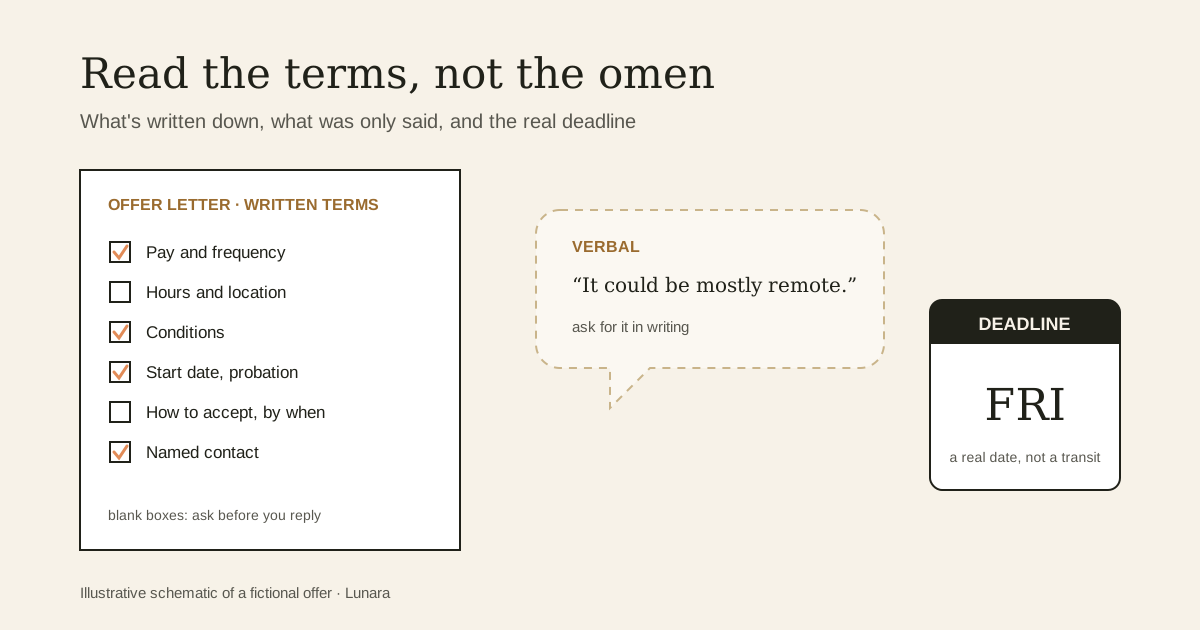
Short answer: a Mercury retrograde is no evidence that a particular job offer is good or bad. Don't miss a real deadline, delay a job you need or resign from one because of the planets. Read the offer itself, ask about anything unclear, and take proper advice where the stakes are high.
Astrology can give you a few reflective questions. It can't review a contract, and it can't tell you whether an employer will keep its promises.
The 2026 dates
These come from Lunara's existing Swiss Ephemeris calendar for this retrograde, rounded to the minute. Nothing new was calculated for this article.
- Mercury stations retrograde: 24 October 2026, 07:13 UTC
- Mercury stations direct: 13 November 2026, 15:54 UTC
- Venus stations direct: 14 November 2026, 00:28 UTC
Your local calendar date can differ by timezone; in parts of the Americas, for example, Venus turns direct on 13 November. The Mercury retrograde in Scorpio 2026 calendar has the full list and local times for several cities.
Facts to confirm, and priorities to weigh
An offer contains two different kinds of thing. Keep them apart.
Facts you can check. These should be the same whoever reads them:
- pay: the amount, the currency and how often it's paid;
- hours and where the work happens: on site, remote or a mix;
- any conditions attached to the offer, such as references or checks;
- the start date and any probation period;
- the actual deadline to accept, and how to accept;
- a named person to contact with questions.
Priorities only you can weigh. These are about your situation, not the document:
- whether the pay works for your costs and plans;
- how the commute or remote arrangement fits your life;
- what you'd be giving up, and how you feel about the team and the work.
If a fact is missing or vague, that's something to ask about, not something to interpret. Some general prompts:
- "Could you confirm in writing where the role is based day to day?"
- "Is the start date fixed, or is there flexibility?"
- "What happens if a reference arrives after the start date?"
- "Who should I contact with questions before I reply?"
These are general suggestions, not legal duties. What an employer must provide, and what counts as an agreement, depends on where you live and work.
A UK example of what a written offer covers
If you're in the UK, Acas, the British employment advice service, publishes guidance for employers called Offering someone a job. Last updated on 30 June 2026, it recommends putting a job offer in writing to help avoid misunderstandings.
According to that page, an offer letter typically sets out the job title and confirms the offer; any conditions, such as references or a health check; the main terms, such as salary, hours, benefits, pension, holiday and where the work is done; the start date and any probation period; how to accept or decline; and someone to contact. It also suggests accepting in writing.
That's UK guidance written for employers. Other countries have different rules, so use it as a sense of what a clear offer can include, not as a statement of your rights elsewhere.
A fictional offer
Everything in this example is invented.
Sam receives an offer on a Wednesday. It needs an answer by Friday.
- In the interview, the hiring manager said the role could be mostly remote. The written offer letter only names an office address.
- The offer is conditional on references, and one hasn't come back yet.
- Sam isn't sure whether their current contract requires one month's notice or two.
It's also the first week of the retrograde. A friend says, "Don't sign anything until Mercury goes direct."
The retrograde doesn't change any of Sam's actual questions. Waiting three weeks wouldn't make the remote arrangement clearer, and it could mean missing the deadline. So Sam decides to:
- ask the employer to confirm the working arrangement in writing;
- check the notice period in their current contract, and get local advice if it's still unclear;
- ask whether a short, specific extension to the deadline is possible, without assuming it will be granted.
That isn't a verdict to accept or reject the job. It's a decision to get the missing facts first.
Two replies you could adapt
Asking for clarification:
Thank you for the offer. I'm very interested in the role. Before I reply, could you confirm in writing the working arrangement we discussed? The letter lists the office address, and I'd like to be sure how often the role is expected to be on site. I'd also be grateful to know the expected timing for the outstanding reference.
Asking for a short extension:
Thank you again for the offer. I'm checking the notice period with my current employer and want to give you a firm answer. Would it be possible to reply by Tuesday at 12:00 rather than Friday? If that isn't possible, please let me know and I'll respond by Friday as planned.
Name an exact time, and keep the original deadline in mind until you hear back. A verbal promise isn't necessarily meaningless, but a written confirmation makes it much easier for both sides to remember the same thing.
Mercury and Venus as optional questions
If astrology is part of how you reflect, two planets offer simple prompts. They're symbolic, and they don't cause misunderstandings in offer letters.
- Mercury, communication: what have I assumed that nobody has actually written down?
- Venus, what I value: if the pay and title were the same elsewhere, what would make me choose this job?
Keep two things apart. The current retrograde is a transit, a period that happens for everyone. Your natal Mercury and Venus are fixed points in your own birth chart. Neither one decides whether to take a job.
Explore further
If you want to look at your own Mercury and Venus, you can calculate your free birth chart. Add a birth time and city only if you know them.
To see how a written natal reading handles placements, read the sample natal reading, which uses fictional birth details. There's also an optional paid personal birth chart reading, an automated, written interpretation of one person's chart for reflection. It isn't a career forecast, it can't tell you how a recruiter will respond, and it doesn't pick dates. What's included and the price are shown before you buy.
Text written with AI assistance. Retrograde dates come from Lunara's existing ephemeris calendar. This article isn't legal, financial or employment advice.