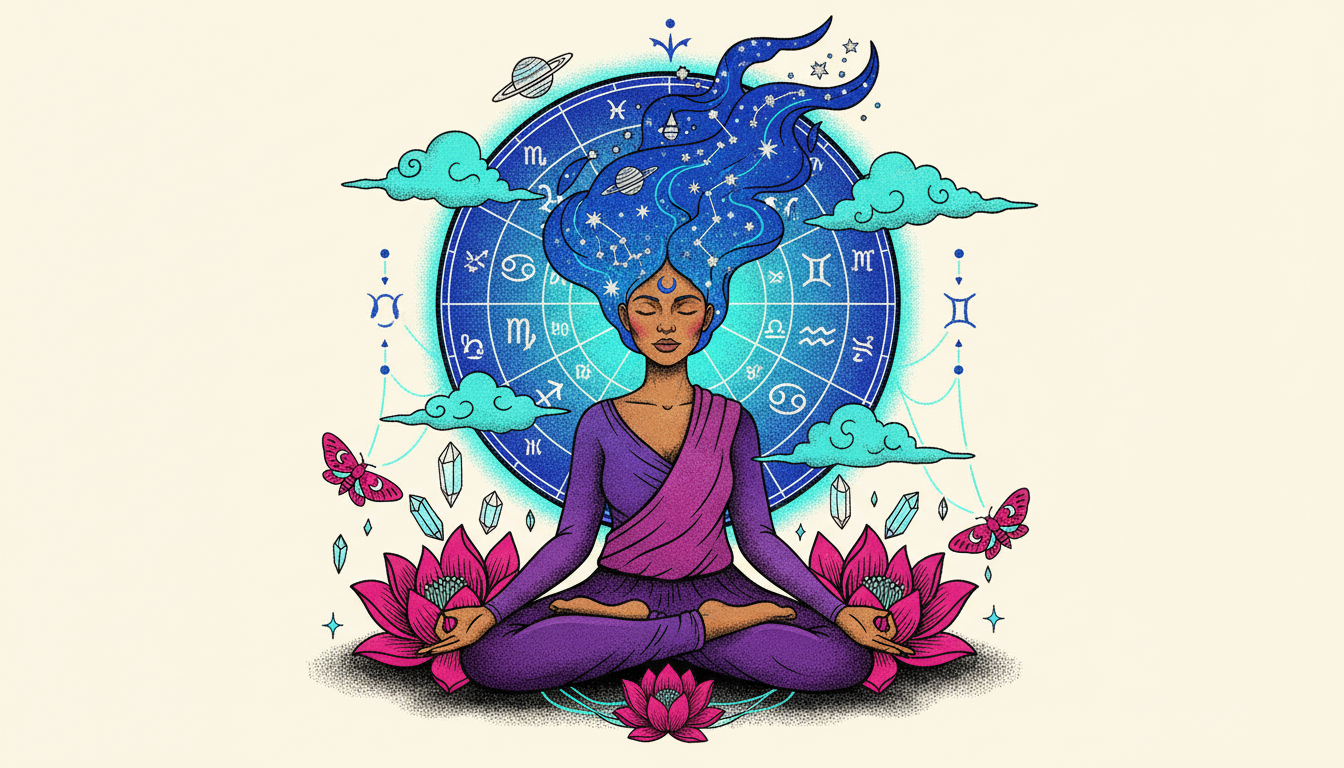
Understanding Your Cosmic Blueprint
Your birth chart is the most powerful tool for self-understanding you'll ever encounter. Unlike your sun sign—the one-dimensional astrology you see in horoscopes—your natal chart is a three-dimensional map of exactly where the planets were at the moment you drew your first breath. It's not just what you appear to be. It's who you actually are.
A natal chart analysis goes far beyond telling you that you're a Taurus or a Gemini. It reveals your emotional needs, your relational patterns, your natural talents, your core wounds, and the blueprint of your entire life. Within those circles and symbols is an invitation to understand yourself at the deepest level—and in that understanding lies your freedom.
For centuries, astrologers have used natal charts to guide emperors, heal the wounded, and help ordinary people recognize their extraordinary potential. Today, this knowledge is available to anyone willing to look at their chart with honest, curious eyes. You don't need to be spiritually advanced or mathematically gifted. You just need to want to understand yourself better. And if you're reading this, you probably do.
The beauty of natal chart analysis is that it's infinitely deep. You can spend five minutes understanding your sun, moon, and rising signs—or fifty years exploring the nuanced dance between your Venus and Mars placements. This guide will give you the foundation to do both: quick insights for daily application and deeper frameworks for ongoing self-discovery.

What Natal Chart Analysis Actually Is
A natal chart (also called a birth chart) is an astronomical snapshot of the solar system from your exact birth location at the exact moment you were born. It's created using three pieces of information: your birth date, birth time, and birth location. The more precise this information, the more accurate your chart.
The chart itself is a wheel divided into twelve houses, with the planets positioned in different signs of the zodiac. Think of it as a map where:
-
The planets represent different energies and life areas (your will, emotions, communication, relationships, transformation)
-
The zodiac signs describe how those energies express themselves (boldly, cautiously, creatively, logically)
-
The houses show which area of life those energies influence (identity, values, communication, home, creativity, work, relationships, transformation, philosophy, career, friendship, spirituality)
Your sun sign is just one planet in one house. Most people are aware of it because it's the zodiac sign associated with their birth date. But that's 1/11th of the story. A complete natal chart analysis examines all ten personal planets, their placements in signs, their house positions, and the angles they make with each other (called aspects).
The result? A personalized guide to your psychology, your talents, your challenges, and your life direction—far more accurate and useful than any horoscope you'll read online.
How to Analyze Your Natal Chart Step by Step
Analyzing your natal chart is a skill that develops over time. Start with these steps and return to them as your understanding deepens.
Step 1: Get an Accurate Birth Chart
Before analysis comes data. Visit a free natal chart generator and enter:
-
Your birth date
-
Your birth time (down to the minute, if possible)
-
Your birth city or coordinates
If you don't have your exact birth time, put it as 12:00 PM (noon), but know that your birth time significantly affects your rising sign and house placements. Your birth certificate usually has your exact time—it's worth requesting from your local vital records office.
Step 2: Identify the Big Three
Begin with what astrologers call the "Big Three": your sun sign, moon sign, and rising sign. These three form your core identity and how you move through the world.
-
Your Sun Sign (marked ☉ on your chart) is your core identity and life purpose. It's the conscious you, your ego, your will, and the legacy you're meant to leave.
-
Your Moon Sign (marked ☾) is your emotional nature and inner world. It governs your needs, your conditioning, your instinctive responses, and who you are in private.
-
Your Rising Sign (also called your Ascendant, marked as "ASC" on the chart) is how others perceive you before they really know you. It's the mask you naturally wear, your presentation, your first impression.
A person with a Scorpio sun, Cancer moon, and Libra rising will seem charming and socially graceful (Libra rising) but actually experience deep, private emotional intensity (Cancer moon) in service of their profound need to penetrate truth and power (Scorpio sun). Knowing all three creates accurate self-understanding.
Step 3: Map the Planets in Signs and Houses
After the Big Three, examine the other planets:
-
Mercury (communication, thinking style)
-
Venus (love, values, attraction)
-
Mars (action, desire, aggression)
-
Jupiter (expansion, luck, growth)
-
Saturn (structure, limitation, maturation)
-
Uranus (innovation, rebellion, awakening)
-
Neptune (dreams, illusion, spirituality)
-
Pluto (transformation, death and rebirth, power)
For each planet, note: Which sign is it in? Which house?
A Mars in Pisces makes someone less directly aggressive and more strategically compassionate in conflict. Place that same Mars in the 7th house (relationships) and aggression expresses primarily through intimate partnerships. These combinations are how you truly understand yourself.
Step 4: Examine Major Aspects
Aspects are angles between planets that either harmonize (easy) or create friction (challenging). The five major aspects are:
-
Conjunction (0°): Planets merge their energies, intensifying both
-
Sextile (60°): Harmonious, supportive energy
-
Square (90°): Tension that drives growth and action
-
Trine (120°): Natural talent and ease
-
Opposition (180°): Polarity that creates awareness and balance
A Sun-Saturn square means your personal will constantly meets with limitation and self-doubt—but that same square builds unshakeable character and the ability to overcome impossible odds. A Sun-Jupiter trine gives natural confidence and luck, though it can create entitlement if unconscious.

Key Components: Planets, Signs, Houses, and Aspects
The Planets: What Energies They Represent
Each planet governs a different dimension of your psyche and life:
The Personal Planets (most influential in daily life):
-
Sun: Ego, will, identity, conscious purpose
-
Moon: Emotions, instincts, security needs, the unconscious
-
Mercury: Communication, thinking, logic, information processing
-
Venus: Love, values, attraction, what brings you pleasure
-
Mars: Desire, action, aggression, sexual energy, courage
The Outer Planets (slower-moving, deep patterns):
-
Jupiter: Growth, expansion, luck, philosophy, abundance
-
Saturn: Boundaries, limitations, discipline, time, maturity
-
Uranus: Innovation, rebellion, sudden change, freedom
-
Neptune: Dreams, dissolution, spirituality, illusion, compassion
-
Pluto: Transformation, death and rebirth, power, obsession
The Zodiac Signs: How Energy Expresses
All twelve signs exist somewhere in your chart. They describe the flavor of each planet's expression:
Fire Signs (Aries, Leo, Sagittarius): Bold, direct, spontaneous, courageous Earth Signs (Taurus, Virgo, Capricorn): Practical, grounded, steady, material-focused
Air Signs (Gemini, Libra, Aquarius): Mental, communicative, idealistic, social Water Signs (Cancer, Scorpio, Pisces): Emotional, intuitive, sensitive, relational
A Venus in Leo loves grandly and publicly. A Venus in Scorpio loves intensely and secretly. Neither is better—they're just different.
The Twelve Houses: Where Life Energy Flows
The houses represent the twelve areas of your life:
-
1st House (Identity): Self, appearance, beginnings
-
2nd House (Values): Money, possessions, self-worth
-
3rd House (Communication): Thinking, speaking, siblings, short journeys
-
4th House (Foundation): Home, family, roots, private self
-
5th House (Creativity): Romance, children, self-expression, joy
-
6th House (Service): Work, health, daily routines, service
-
7th House (Partnership): Marriage, business partners, open enemies
-
8th House (Transformation): Sexuality, death, inheritances, shared resources, psychology
-
9th House (Expansion): Philosophy, higher learning, long journeys, beliefs
-
11th House (Community): Friendship, groups, hopes, social circles
-
11th House (Hopes): Future aspirations, unconventional expression
-
12th House (Dissolution): Spirituality, hidden matters, the unconscious, institutions
A planet in the 10th house affects your career and public image. The same planet in the 4th house affects your home and private life.
Aspects: The Conversations Between Planets
Planets don't exist in isolation—they interact. An aspect is a geometric angle that describes the quality of that interaction.
Easy aspects (Sextile, Trine):
-
The planets work together naturally
-
Talent, support, ease
-
Risk: Taking gifts for granted, not developing depth
Challenging aspects (Square, Opposition, Conjunction):
-
The planets create friction or intensity
-
Growth, character, complexity
-
Gift: The pressure builds unshakeable strength
[IMAGE PLACEHOLDER #1: Natal Chart Wheel with Labeled Planets, Signs, and Houses
-
Dimensions: 1200x1200px
-
Description: A circular natal chart wheel showing the 12 houses clearly labeled with Roman numerals, the zodiac signs around the outer wheel with their symbols, and the 10 planets positioned within their respective houses and signs. Use a dark background (cosmic blue or black) with gold or silver lines. Include a legend explaining the planet symbols. This is the reference image for understanding the basic structure of a natal chart.]
Common Patterns and What They Reveal
Certain patterns appear repeatedly in natal charts. Learning to recognize them gives you immediate insight into personality and life direction.
Stelliums (Three or More Planets in One Sign or House)
A stellium concentrates enormous energy in one area. A 10th house stellium creates someone intensely focused on career and legacy. A Scorpio stellium obsesses over deep truth and transformation.
The gift: Mastery and specialization. The challenge: Imbalance and one-track-mindedness.
Grand Trines (Three Planets in Harmonious Angles)
A Grand Trine creates a flow of effortless talent across three planets. These people are naturally gifted but sometimes lack motivation.
The gift: Natural ability, ease, flow. The challenge: Complacency, lack of resilience when things get hard.
T-Squares (Two Opposing Planets Both Squared to a Third)
A T-Square creates tension that demands resolution. These people face constant pressure to integrate contradictory needs.
The gift: Psychological depth, achievement, the ability to synthesize opposites. The challenge: Chronic stress, the sense that you can never fully relax.
Yod or Finger of Fate (Two Planets Sextile to Each Other, Both Quincunx to a Third)
A Yod creates a sense of destiny and unusual life purpose. The third planet (the apex) feels driven to fulfill an unconventional calling.
The gift: Unique purpose, spiritual direction, the sense of being called. The challenge: Pressure, the feeling of being chosen for something difficult.
Empty Houses
Not all houses have planets in them. An empty house doesn't mean that area is unimportant—it means you're meant to develop it consciously rather than having innate talent or burden.
An empty 7th house doesn't mean you won't marry. It means relationships require conscious work and skill-building rather than coming naturally.

How to Interpret Your Own Chart
Reading your own chart is a delicate balance between honesty and compassion. Here's how to approach it:
Start with Curiosity, Not Prediction
Your chart isn't destiny—it's potential. A chart showing difficult Saturn placements doesn't predict suffering; it shows where you'll develop unshakeable strength if you engage with the challenge consciously.
Approach your chart with scientific curiosity: "What is this showing me? What patterns do I recognize in myself?" rather than "Is this good or bad?"
Look for Themes and Patterns
Don't get lost in single interpretations. Step back and ask: What themes repeat across my chart?
- Do I have many water sign placements (suggesting emotional sensitivity)?
- Are my personal planets in air signs (suggesting mental orientation)?
- Do I have planets clustered in certain houses (suggesting life focus areas)?
- Are my major aspects mostly easy or challenging (suggesting ease or depth)?
These patterns reveal your true nature more accurately than any single placement.
Acknowledge Your Wounds
The challenging placements in your chart aren't mistakes—they're your initiation. A Saturn in the 1st house suggests a person with a deep wound around self-worth and identity, but also the capacity to develop ironclad self-knowledge and presence.
A Pluto square Sun suggests internal power struggles and identity death-and-rebirth, but also the potential for profound transformation and authentic self-possession.
Don't try to "fix" these placements. Instead, ask: "What is this teaching me? How is this making me stronger?"
Recognize Your Gifts
Don't dismiss your easy aspects as luck. A Jupiter trine Venus doesn't magically guarantee happiness—but it does give you the inner resilience and self-worth to create it.
Own your gifts. You earned them through past effort (whether in this life or before, depending on your beliefs). A natural communicator (Mercury in an air sign well-aspected) has a responsibility to communicate truthfully. A natural healer (strong 8th house, Neptune prominent) has a calling to transform wounds into wisdom.
Use It as a Mirror, Not a Crystal Ball
Your chart is most useful as a psychological and spiritual mirror. It shows you who you are, your patterns, your potential, your shadows, and your light.
It's least useful as a fortune-telling tool. "Will I find love?" isn't answered by your natal chart; "What am I attracting in relationships?" is.
Use your chart for self-understanding, not prediction. Use it to recognize patterns so you can make conscious choices rather than repeating them.
[IMAGE PLACEHOLDER #2: Sun-Moon-Rising Sign Combinations
- Dimensions: 1000x800px
- Description: A visual guide showing 9 example combinations of Sun, Moon, and Rising signs (like "Aries Sun, Cancer Moon, Libra Rising"). For each, show the zodiac symbols and provide a 1-2 sentence description of how that combination manifests (e.g., "Appears charming but feels deeply" or "Seems bold but needs emotional security"). Use icons for the signs and clean typography. This helps readers understand how the Big Three interact.]
Moving Deeper: What Natal Chart Analysis Reveals
A thorough natal chart analysis answers questions that most people wonder about themselves:
Why do I feel so different inside than I appear outside? (Your moon sign is totally different from your rising sign.)
Why do I struggle in relationships even though I want them?
(Venus and Mars create specific relational patterns; Saturn aspects to Venus create fear of love; Pluto in the 7th creates power dynamics.)
Where is my natural talent? (Look at your trines—easy aspects—and planets in angular houses.)
What am I meant to do with my life?
(10th house planets, Sun sign, planets in the 9th house, your nodal axis.)
Why do I keep experiencing the same problems? (Look at your squares and oppositions—these are the repeating lessons until you integrate them.)
What are my emotional needs?
(Your moon sign, the 4th house, and lunar aspects.)
Where should I focus my energy? (The houses where you have stelliums, and any planets in angular houses.)
A skilled natal chart analysis can guide career decisions, relationship patterns, personal development focus, and spiritual practice. But remember: You're not bound by your chart. Your chart is a map of your potential, not a prison of your destiny.

Beyond the Birth Chart: Continuing Your Astrological Education
Natal chart analysis is just the beginning. Once you understand your birth chart, the study of astrology opens into:
-
Transits: Current planetary positions and how they interact with your birth chart
-
Progressions: How your chart evolves as you age
-
Synastry: How your chart compares and interacts with someone else's
-
Lunar cycles: Monthly emotional cycles based on the moon's movement
-
Seasonal cycles: Yearly spiritual themes
Each of these tools provides another layer of understanding. But the foundation is always your natal chart.
[IMAGE PLACEHOLDER #3: The Astrological Houses Meaning Chart
- Dimensions: 1200x900px
- Description: A circular wheel showing all 12 houses with their domains clearly labeled. Each house should include: the house number (in Roman numerals), the life area it governs, and 2-3 key themes. For example, "7th House - Partnership - Marriage, Business Partners, Open Enemies, Balance." Use a color-coded system where each quadrant is a different color. This serves as a quick reference guide.]
Take Action: Understand Your Cosmic Blueprint
Natal chart analysis is one of humanity's oldest and most useful technologies for self-understanding. It's not mystical magic or fortune-telling—it's applied astronomy and psychological archetypes, proven over millennia to reveal truth about human nature and potential.
You have a cosmic blueprint. It shows your natural talents, your core wounds, your relational patterns, your life purpose, and the themes you're meant to integrate. That blueprint is waiting for you to understand it.
Ready to explore your natal chart deeply? Use our free natal chart calculator to generate your birth chart instantly. Enter your birth date, time, and location, and you'll receive your complete chart with explanations of every element.
No account needed. No signup required. Just pure, actionable self-knowledge.
Related Articles
Deepen your understanding of astrology and self-discovery: