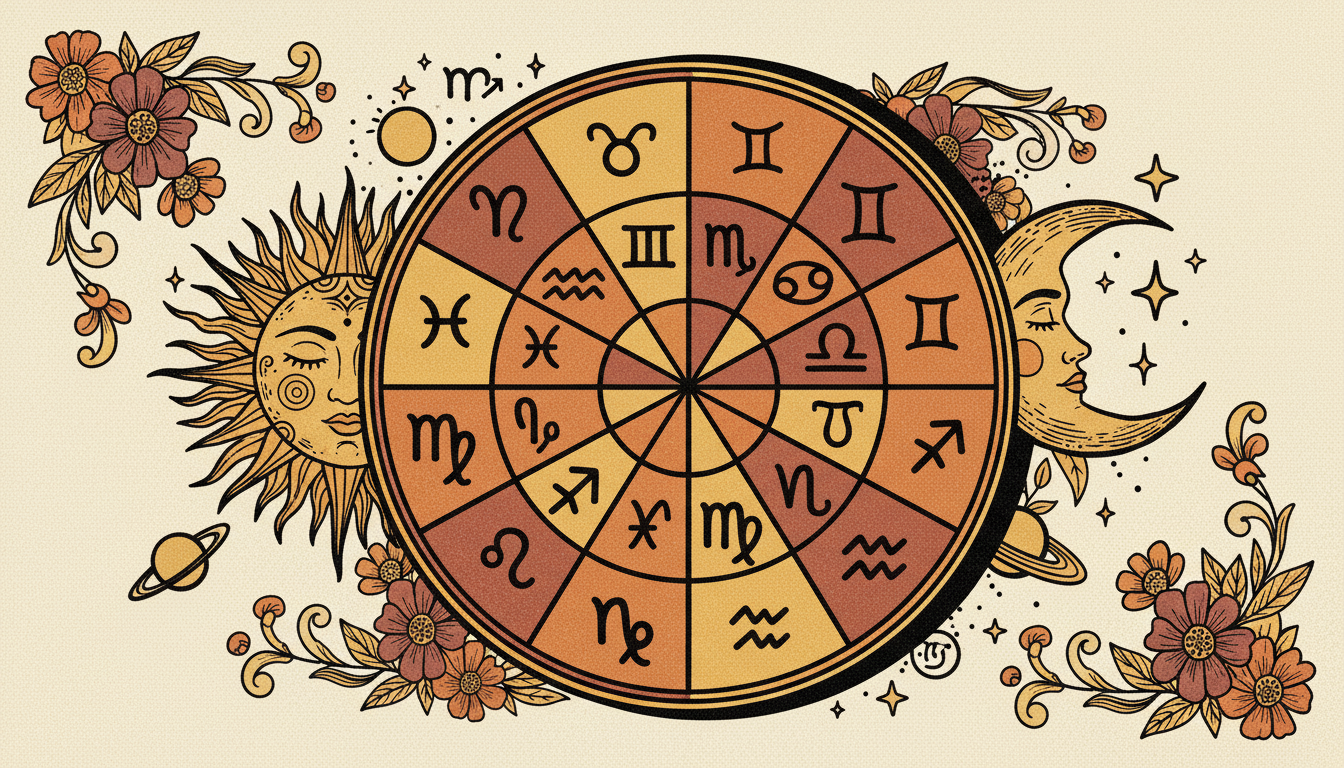
Your astral chart is more than a snapshot of planetary positions at your birth moment—it's a cosmic blueprint that reveals the layers of your being. But like any blueprint, interpretation is the key to unlocking its meaning.
Many people calculate their astral chart only to stare at it confused: what do all those symbols mean? How do they connect? What's actually important versus noise?
Astral chart interpretation transforms raw data into wisdom. It's the bridge between calculation and understanding, between stars and self-knowledge.
In this guide, we'll explore what an astral chart actually reveals, the core components that matter most, proven interpretation methods, and a step-by-step reading guide you can use immediately.
What Is an Astral Chart?
An astral chart—also called a natal chart or birth chart—maps the positions of celestial bodies at the exact moment and location of your birth. It includes:
-
Planets: The Sun, Moon, Mercury, Venus, Mars, Jupiter, Saturn, Uranus, Neptune, and Pluto
-
Signs: The zodiacal positions of these planets (Aries through Pisces)
-
Houses: Twelve life areas influenced by planetary placements
-
Aspects: Angular relationships between planets (conjunctions, squares, trines, etc.)
-
Angles: The Ascendant (rising sign), Descendant, Midheaven, and Imum Coeli
Why does it matter?
Your astral chart reflects your energetic signature—your natural inclinations, emotional patterns, relational styles, and life themes. It's not deterministic (you have free will), but it shows the archetypal energies you work with.
Two people born on the same day at different times and locations have completely different astral charts. Your uniqueness is encoded in these specific placements and aspects.

The Four Core Components to Interpret
1. The Ascendant (Rising Sign)
Your Ascendant is your cosmic mask—the first impression you make, how you approach life, and the lens through which you experience the world.
Why it's crucial: The Ascendant is arguably more important than your Sun sign for understanding how you actually behave day-to-day.
Interpretation points:
-
The sign of your Ascendant shapes your personality presentation
-
The planetary ruler of your Ascendant sign is extraordinarily influential
-
House placements of this ruler planet show where your life focuses
Example: If you're Libra rising (Venus rules Libra), examine Venus's sign, house, and aspects. Venus in Scorpio in the 4th house suggests your Libra exterior masks deep emotional needs for intimacy and family closeness.
2. The Sun, Moon, and Rising Triangle
These three form your core identity framework:
Sun (Conscious Self):
-
Your ego, will, life force, and sense of purpose
-
The self you're becoming throughout life
-
Conscious identity and creative expression
Moon (Emotional Self):
-
Your inner emotional world and unconscious patterns
-
What you need to feel secure and whole
-
Intuition, memories, and emotional responses
Rising (Personality Mask):
-
How the world sees you
-
Your behavioral instincts and approach to life
-
The filter through which you experience external reality
Interpretation insight: When these three align well (harmonious aspects), you experience coherence—your inner reality matches your outer presentation.
When they conflict (challenging aspects), you experience internal complexity. Your Sun wants recognition, your Moon wants privacy, your Rising seems friendly but reserved. That's real, and it's your superpower once understood.
3. Personal Planets (Mercury, Venus, Mars)
These determine daily experience and relational dynamics:
Mercury (how you think and communicate):
-
Your mental style and learning approach
-
Communication preferences
-
Logic, curiosity, and problem-solving method
Venus (how you value and relate):
-
What you value and attract
-
Love and attraction style
-
Aesthetic sense and self-worth
Mars (how you act and desire):
-
Your drive, assertion, and action style
-
Sexual expression and passion
-
Competitiveness and courage
Interpretation method: For each planet, examine:
-
The sign (how it operates)
-
The house (where and through what area of life)
-
Aspects to other planets (how it cooperates or conflicts)
Example interpretation: Mercury in Sagittarius (10th house) + Venus in Capricorn (9th house) + Mars in Libra (8th house) = Someone who thinks big and optimistically (Sagittarius Mercury), values serious commitment and learning (Capricorn Venus in 9th), but acts diplomatically and seeks partnership (Libra Mars). Potential career path: teaching, philosophy, law, or counseling where communication, values, and relationship skills merge.
4. The Houses
The 12 houses represent life areas where planetary energy operates:
| House | Area of Life | |-------|--------------| | 1st | Self, personality, first impressions |
| 2nd | Values, resources, self-worth | | 3rd | Communication, learning, siblings | | 4th | Home, family, emotional foundation | | 5th | Creativity, romance, self-expression |
| 6th | Health, service, daily routines | | 7th | Partnerships, marriage, relationships | | 8th | Transformation, shared resources, intimacy | | 9th | Philosophy, travel, higher learning |
| 10th | Career, public image, authority | | 11th | Friendships, community, hopes, groups | | 12th | Spirituality, subconscious, hidden realms |
Interpretation principle:
A planet's house placement tells you where its energy operates. Sun in 1st house expresses directly and publicly. Sun in 12th house expresses internally and privately.
The more planets you have in a house, the stronger the theme of that life area.

Five-Step Astral Chart Interpretation Method
Follow this proven framework for accurate interpretation:
Step 1: Chart Shape and Element Balance
Before examining specific placements, step back:
Look for:
-
Is the chart balanced or concentrated?
-
Do planets cluster in certain areas (stelliums)?
-
Is there emphasis on fire (passionate/action), earth (practical/grounded), air (mental/communicative), or water (emotional/intuitive)?
This reveals: General temperament and life focus before details.
Step 2: Identify the Chart Ruler
Determine your Ascendant sign, then find the ruling planet.
Ascendant to Ruler mapping:
-
Aries → Mars
-
Taurus → Venus
-
Gemini → Mercury
-
Cancer → Moon
-
Leo → Sun
-
Virgo → Mercury
-
Libra → Venus
-
Scorpio → Pluto
-
Sagittarius → Jupiter
-
Capricorn → Saturn
-
Aquarius → Uranus
-
Pisces → Neptune
Interpret this ruler's sign, house, and aspects. It's often more revealing than the Sun.
Step 3: Sun-Moon Assessment
Examine the relationship between your Sun and Moon:
-
Harmonious aspect (trine, sextile) = inner alignment
-
Challenging aspect (square, opposition) = internal tension and growth
-
No major aspect = separate development
Synthesize: "My conscious identity (Sun in ___) and emotional needs (Moon in ___) create [theme]."
Step 4: Personal Planet Synthesis
Map Mercury, Venus, and Mars as a trio:
- Mental style + values + action style = overall relational approach
Example: Mercury in Gemini (curious, intellectual) + Venus in Taurus (loyal, sensual, practical) + Mars in Scorpio (intense, passionate, focused) = Someone intellectually flexible but emotionally steady, with deep erotic intensity underneath.
Step 5: Pattern Recognition and Themes
Look across all placements for repeating themes:
-
Intensity and depth appearing in multiple positions? You're a depth-oriented person.
-
Scattered, diverse placements? You're multi-talented and adaptable.
-
Challenge aspects concentrated in relationship houses? Learning partnerships is a life theme.
Weave these observations into 3-5 core themes about who you are.
Type: Interpretation Flowchart Dimensions: 1200x700 Alt Text: Astral chart interpretation process from data to meaning Description: Clean, professional flowchart visualizing the interpretation process. Top: Raw astral chart wheel with all planetary positions. Flowing downward through clearly labeled stages: 1) Chart Overview (shape, elements), 2) Ascendant & Ruler, 3) Sun-Moon Relationship, 4) Personal Planets, 5) House Placements, 6) Aspect Patterns, 7) Theme Synthesis. Each stage has a small icon representing that step. Bottom: Final output showing "Integrated Interpretation = Self-Understanding." Color palette: White background, professional purple and gold accents, clear hierarchy with numbered boxes, flowing arrows, readable sans-serif fonts. Priority: High
File Name: astral-chart-interpretation-process.jpg Priority: High

Common Interpretation Mistakes to Avoid
Mistake 1: Reading Sun Sign Only
Many people identify as their Sun sign exclusively: "I'm a Capricorn."
Reality: Your Sun is one of many influences. You're also your Moon, Rising, Mercury, Venus, Mars, and house placements.
A Capricorn Sun with Aries Moon and Libra Rising is completely different from Capricorn Sun with Cancer Moon and Scorpio Rising.
Mistake 2: Isolated Placement Interpretation
Never interpret a placement without context.
Wrong: "Venus in Scorpio means you're obsessive and controlling in love."
Right: "Venus in Scorpio suggests valuing depth, intensity, and loyalty in relationships. The house placement, aspects, and overall chart determine how this expresses—some people channel this into devoted partnership, others into exploration of erotic depth."
Mistake 3: Treating Placements as Destiny
Your chart shows potentials, not fixed outcomes.
Two people with identical charts can live very differently based on:
- Conscious choices and values
- Life circumstances and opportunities
- Self-awareness and psychological work
- Cultural and family context
Mistake 4: Ignoring Challenging Aspects
Squares and oppositions aren't "bad." They create tension that motivates growth.
Someone with Moon square Mars might experience emotional volatility—but this also gives them emotional courage and the ability to assert their needs. The challenge becomes the gift.
Mistake 5: Overwhelming with Details
Don't list every minor aspect and asteroid.
Focus on 3-5 major themes that actually matter. Synthesis beats comprehensiveness.
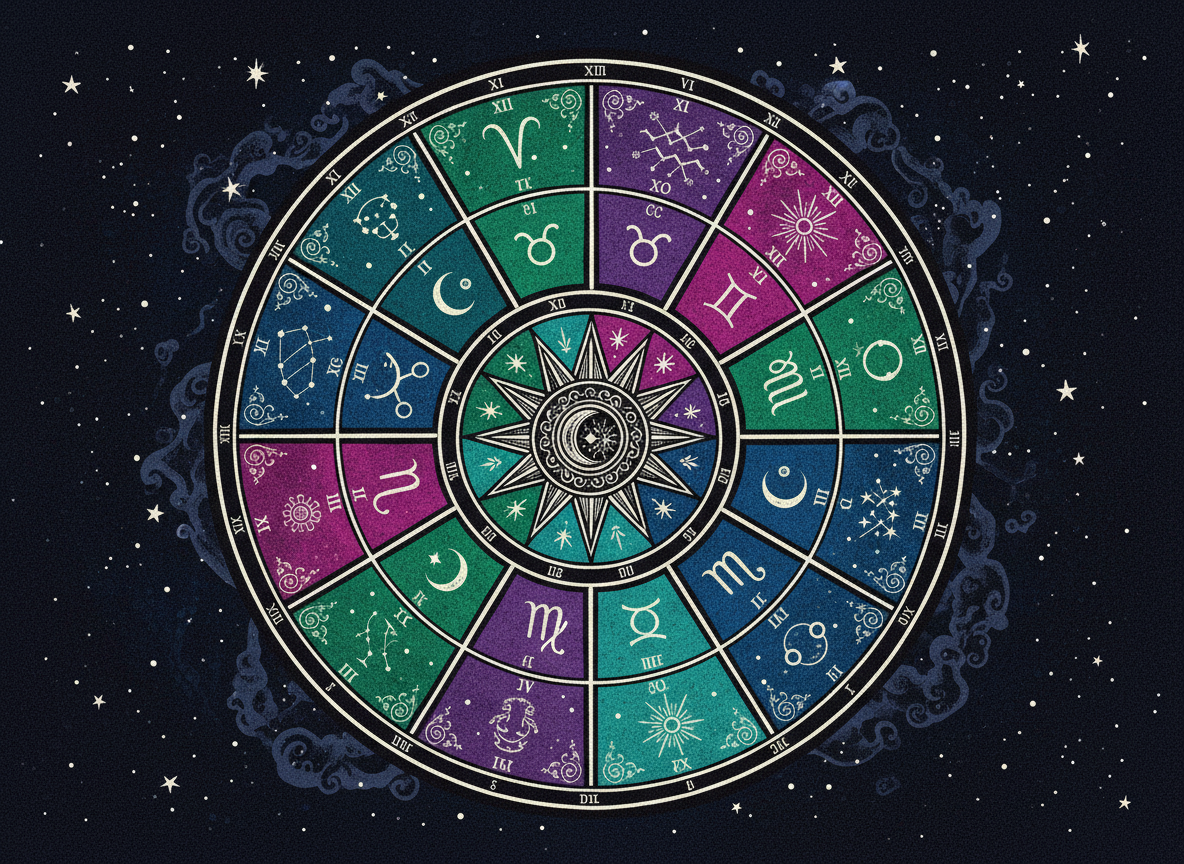
A Practical Astral Chart Reading Guide
Use this step-by-step guide to interpret any chart (yours or someone else's):
Step 1: Gather the Data Get an accurate birth time, date, and location. Calculate or obtain the astral chart.
Step 2: Note First Impression
Spend 2 minutes looking at the chart without analysis. What stands out? Where are planets concentrated? Is it balanced or focused?
Step 3: Identify Chart Ruler Your Ascendant's ruling planet is your entry point. Interpret it thoroughly: sign, house, aspects.
Step 4: Assess Sun and Moon
Read their signs and aspects carefully. What's the internal dynamic?
Step 5: Examine Personal Planets Mercury, Venus, Mars—the day-to-day experience trinity.
Step 6: Note House Emphasis
Which houses have multiple planets? These are life themes.
Step 7: Look for Patterns Do themes repeat? Is the chart intense, scattered, balanced, focused? Intuitive, mental, physical, emotional?
Step 8: Synthesize Into 3-5 Core Themes
Integrate all observations into a coherent narrative about this person's fundamental nature.
Step 9: Consider Life Areas If reading for a purpose (career, relationships, spirituality), focus interpretation on those houses.
Step 10: Verify and Refine
Does this interpretation feel true? Are there contradictions that actually reflect human complexity? Refine until coherent.
Why Astral Chart Interpretation Matters
Beyond curiosity, interpretation serves real purposes:
-
Self-understanding: Recognizing why you are the way you are
-
Compassion: Understanding others' different wiring
-
Life alignment: Living in harmony with your nature instead of against it
-
Relationship harmony: Understanding your partner's chart too
-
Purpose clarity: Finding work and life paths that suit your nature
-
Shadow work: Acknowledging and integrating difficult placements
-
Spiritual growth: Recognizing your unique evolution path
Tools for Astral Chart Interpretation
Calculation:
- Our Free Astral Chart Calculator - Instant, accurate charts with basic interpretations
- Astro.com - Extensive free options
- Astro Gold app - Mobile app access
Learning Resources:
- The Inner Sky by Steven Forrest
- Astrology for the Soul by Jan Spiller
- The Twelve Houses by Howard Sasportas
Professional Help: A consultation with an experienced astrologer can deepen interpretation and answer specific questions.
Key Takeaways
-
Astral chart interpretation bridges calculation and meaning
-
Your Ascendant (rising sign) often matters more than Sun sign for behavioral understanding
-
Interpret the Sun, Moon, Rising triangle as your core identity framework
-
Always contextualize placements—never interpret in isolation
-
Look for patterns and themes across multiple placements
-
Charts show potentials and tendencies, not fixed destinies
-
Challenging aspects create growth opportunities, not limitations
-
Synthesis and integration are more valuable than comprehensive listing of every placement
Discover what your astral chart reveals about you
Stop guessing at symbols and wondering what your chart means. Calculate your free astral chart now and unlock the cosmic blueprint of your unique nature.
Related Articles: