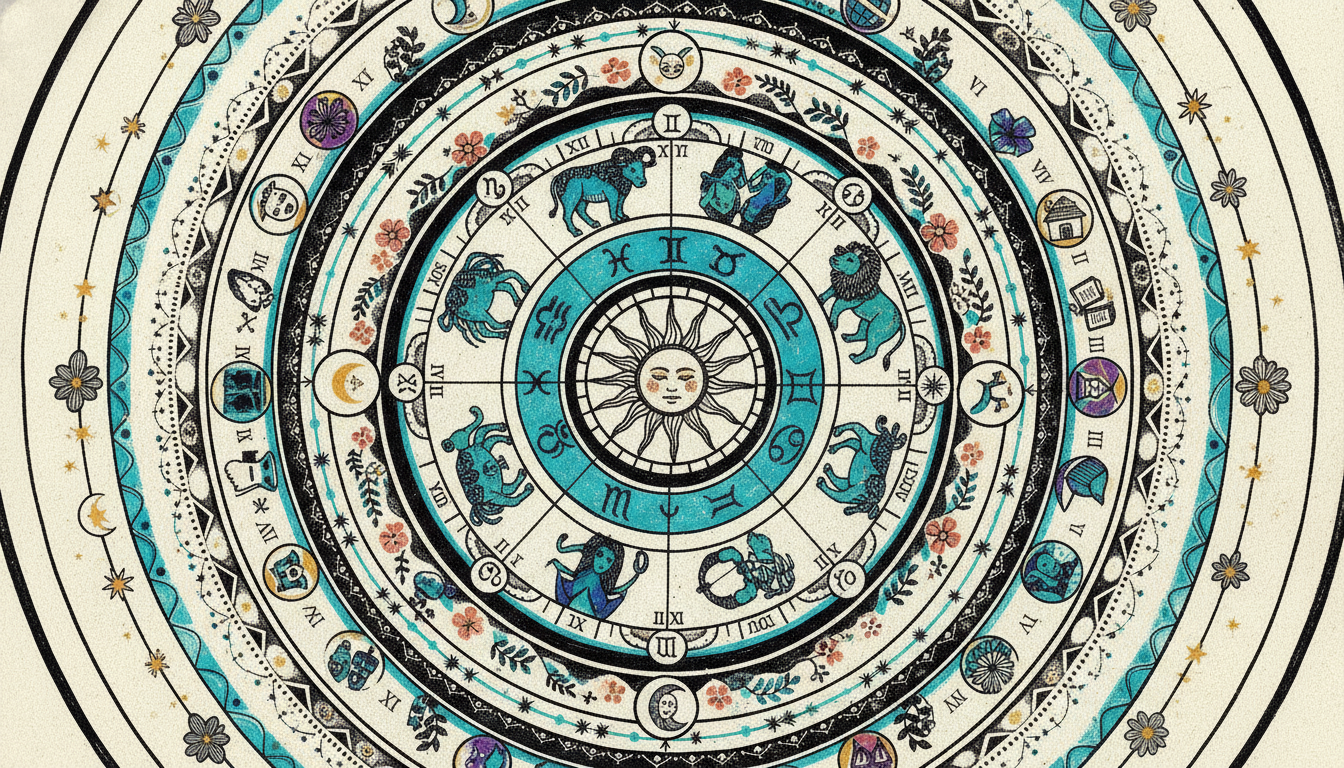
You've probably heard the terms thrown around: "astro chart," "natal chart," "birth chart," "horoscope chart." And if you're new to astrology, they might all sound like the same thing. Here's what nobody tells you: they're actually referring to the same chart, just with different names depending on who's talking about it.
The confusion stops here.
In this guide, we're breaking down the terminology, explaining what these charts reveal, teaching you how to read them, and showing you exactly how to get your own. Whether you're an astrology newbie or someone looking to deepen your understanding, this is your complete roadmap to understanding your cosmic blueprint.
What's the Difference Between an Astro Chart and a Natal Chart?
Let's start with the elephant in the room: there is no functional difference between an "astro chart" and a "natal chart." They're the same thing, just with different names.
Here's the terminology breakdown:
Natal Chart is the formal, traditional astrology term. "Natal" means birth, so a natal chart is literally a chart of the sky at the moment of your birth. This is the term you'll hear from professional astrologers, in textbooks, and in academic astrology discussions. It's the official name.
Astro Chart is a colloquial, modern term—sometimes spelled "astrological chart." It's more casual and is often used by apps, websites, and people just getting into astrology. It refers to the exact same thing as a natal chart but sounds a bit more approachable.
Birth Chart is yet another synonym, equally valid, and probably the most universally understood. Most people new to astrology recognize this term immediately.
Horoscope Chart is slightly different in context but often used interchangeably. Technically, a horoscope is an interpretation of a chart (someone's reading or forecast), but many people use it to mean the chart itself.
The bottom line: When someone says "astro chart," "natal chart," or "birth chart," they're talking about the same exact thing—a snapshot of the sky at the precise moment you were born, mapped across 12 zodiac signs, houses, and planetary positions.
Think of it like calling a photo a "picture," an "image," or a "photograph." Different words, same reality.

The Core Components of Your Astro Chart
Before diving into what your chart reveals, you need to understand what you're looking at. Your natal chart contains several essential layers of information:
The Zodiac Wheel
At the core is a circle divided into 12 segments, each representing one zodiac sign. This wheel maps the 360-degree sky exactly as it appeared at your birth. The signs progress in order—Aries, Taurus, Gemini, Cancer, and so on—around the wheel.
The Planets
Scattered throughout your chart are the planets (and luminaries like the Sun and Moon). Each planet represents a different part of your personality and psyche:
-
Sun: Your core identity and life force
-
Moon: Your emotional inner world and instinctive nature
-
Mercury: How you think and communicate
-
Venus: Love, beauty, and what you value
-
Mars: Drive, passion, and how you assert yourself
-
Jupiter: Expansion, luck, and growth
-
Saturn: Discipline, lessons, and where you mature
-
Uranus: Innovation, rebellion, and sudden change
-
Neptune: Dreams, spirituality, and illusion
-
Pluto: Transformation, power, and deep psychology
The specific zodiac sign each planet occupies when you're born shapes how that planetary energy expresses itself in your personality.
The Houses
Your chart is divided into 12 houses, each governing a specific life area. Your planets fall into these houses, showing where you'll experience their energy most intensely. For example, Venus in your 7th house (partnerships) means relationships are a major focus of your life and values.
The 12 houses represent:
-
Self - Identity, appearance, first impressions
-
Possessions - Money, resources, values
-
Communication - Thinking, siblings, short trips
-
Home - Family, roots, living situation
-
Romance - Love affairs, creativity, self-expression
-
Health - Daily habits, work, service
-
Partnerships - Marriage, relationships, contracts
-
Transformation - Death, rebirth, shared resources, sexuality
-
Philosophy - Travel, higher learning, beliefs
-
Career - Public image, reputation, life direction
-
Friendships - Community, hopes, networking
-
Spirituality - Subconscious, hidden things, karma
The Aspects
Aspects are the angles planets make to each other. A 0-degree angle (conjunction) means two planets are working together. A 180-degree angle (opposition) creates tension. A 90-degree angle (square) is challenging friction. These aspects show how different parts of your personality collaborate or conflict.
Your Big Three
The three most important placements in your chart:
-
Sun Sign - Your conscious identity and ego
-
Moon Sign - Your emotional nature and subconscious
-
Rising Sign (Ascendant) - How others perceive you and your mask to the world
Understanding your big three gives you a foundation for everything else in your chart.
What Your Astro Chart Reveals About You
Your natal chart isn't just entertaining trivia—it's genuine insight into who you are and how you operate. Here's what it can reveal:
Your Core Personality & Life Purpose
Your sun, moon, and rising signs together paint a complete picture of your personality. The sun is your inner driver, the moon is your emotional autopilot, and the rising is your social presentation. Together, they explain:
-
Why you're different from other people with your sun sign
-
Your contradictions and different facets
-
How others perceive you versus how you actually feel
-
Your natural talents and gifts
Your North Node—another critical chart placement—shows your soul's growth direction in this lifetime. It's the area where you're least comfortable but most destined to develop.
Your Relationship Patterns
Venus shows what you value and how you love. Mars reveals what you desire and how you pursue it. Your 7th house (partnerships) and 5th house (romance) show relationship themes. Aspects between Venus and Mars point to your sexuality and passion style.
Your chart can explain:
-
Why you're attracted to certain types
-
Recurring relationship patterns
-
How you attach to others
-
What makes you feel loved and secure
-
Timing for romantic openings in your life
If you keep dating emotionally unavailable people, or always play the caretaker role, your chart probably has something to say about it.
Your Career & Life Direction
Your Midheaven (10th house cusp) rules your public reputation and career path. Your 10th house planets show your professional calling. Your 2nd house governs how you make money and handle resources. Saturn shows where you'll work hardest and eventually master something.
Saturn returns (which happen around age 29, 58, 87) mark major career transitions—promotions, job changes, or complete career pivots. Your chart is actually a timeline of professional evolution if you know how to read it.
Your Emotional Landscape & Needs
Your moon sign is your emotional home base. A Scorpio moon needs intensity and privacy. A Gemini moon needs variety and intellectual stimulation. A Cancer moon needs security and family connection. A Capricorn moon needs achievement and respect.
When you understand your moon sign's needs, suddenly your emotional life makes sense. You stop feeling guilty for needing what you need.
Your Challenges & Growth Areas
Hard aspects (squares and oppositions) point to inner tension. Saturn placements show life's most difficult lessons. Chiron reveals your deepest wound—and paradoxically, where you can heal others.
Your chart doesn't sugarcoat. It shows you struggle zones. But struggle, when understood, becomes mastery.
Type: Infographic Dimensions: 800x600
Alt Text: Birth chart wheel annotated showing planets, houses, zodiac signs, and aspects Description: Circular birth chart wheel with detailed annotations. Center shows sun, moon, rising signs labeled as "Big Three." Outer ring shows 12 zodiac signs with colors. Middle sections show planetary symbols in specific houses. Lines connecting planets show aspects (conjunction, square, opposition, trine). Legend on the side explains planetary symbols. Color palette: deep purple background, gold and white annotations, colorful zodiac wheel. Modern, educational style. File Name: astro-chart-how-to-read.jpg Priority: High

How to Read Your Astro Chart (Step-by-Step)
Reading your chart is less about memorizing meanings and more about understanding the story your placements tell. Here's how to approach it:
Step 1: Find Your Big Three
Start here. Identify your:
-
Sun sign
-
Moon sign
-
Rising sign
Your sun sign is easiest—it's what you know as your zodiac sign (your birth date determines it). Your moon and rising require your birth time and location.
If you see your big three reflected in your personality and life, you're on the right track.
Step 2: Look at Where Your Planets Live
For each planet, note:
- Its zodiac sign
- Which house it occupies
- Any major aspects it makes
For example: "Venus in Pisces, 7th house, trine to Neptune." This tells you that this person loves deeply and somewhat spiritually, relationships are central to their life, and they have a naturally dreamy, artistic approach to love.
Step 3: Read the Story, Not the Sentence
Don't read your placements in isolation. A Venus in Aries sounds passionate and fiery. But if that Venus is heavily aspected by Saturn, it's more inhibited, cautious in love. The Saturn modifies the Venus.
Your chart is a narrative, not a collection of facts.
Step 4: Notice Patterns
Some charts have lots of planets in water signs (emotional, intuitive). Others have strong fire (passionate, direct) or air (intellectual, communicative). Are many planets in one house? That's a major life theme. Lots of hard aspects? You're someone who grows through challenge.
Step 5: Consider Transits & Progressions
Your natal chart is static, but planets are always moving. Current planetary transits interact with your birth chart to show cycles and timing. Learning to read transits is like adding a weather forecast to your cosmic blueprint.
How to Get Your Astro Chart
Getting your chart is actually simple—whether you want to do it yourself or work with a professional.
Option 1: Generate Your Free Chart Online
You need three pieces of information:
-
Birth date (month, day, year)
-
Birth time (as exact as possible—check your birth certificate)
-
Birth location (city and country, or coordinates)
Once you have these, visit a free natal chart generator. Popular options include:
-
Cafe Astrology
-
Co-Star
-
The Pattern
-
Astro.com
Enter your information, generate your chart, and boom—you're looking at your cosmic blueprint. You'll see a wheel full of symbols. From there, you can research what each placement means.
Option 2: Work With a Professional Astrologer
If DIY feels overwhelming, or you want deeper interpretation and guidance, hire an astrologer. They'll:
-
Generate and study your chart ahead of time
-
Identify key themes and patterns
-
Interpret how everything works together
-
Answer your specific questions
-
Put your chart in the context of your actual life
A professional reading typically costs $50-$500+ depending on experience and depth. Many astrologers offer:
-
Quick readings (30 minutes, birth chart basics): $50-$100
-
Standard readings (60 minutes, full chart): $150-$300
-
In-depth readings (90+ minutes, specialized focus): $300+
Option 3: Apps & Subscriptions
Modern apps like Co-Star, The Pattern, and Sanctuary offer daily horoscopes based on your chart and current transits. These can help you learn your placements over time without hiring someone.

Tips for Getting the Most Out of Your Chart
Know Your Exact Birth Time
Your rising sign and house placements depend on your birth time. Being off by even 30 minutes can shift your chart significantly. If you don't have an exact birth time:
- Check your birth certificate
- Ask your parents or hospital
- Some astrologers do "chart rectification" to estimate
Come With Questions
Don't just ask "tell me about myself." Instead ask:
-
"Why do I keep repeating this pattern?"
-
"When will I be ready for a relationship?"
-
"What's blocking me in my career?"
-
"How can I work with my anxiety?"
Specific questions yield specific insights.
Record or Take Notes
You'll hear a lot of information. You won't remember it all. Record the session or document key insights. You'll want to revisit them.
See It As a Starting Point
Your first chart reading won't be your last. As you grow and change, different parts of your chart activate. Revisiting every few years reveals how you've evolved.
Common Misconceptions Cleared Up
"My chart determines my future." No. Your chart shows patterns and potential, not fate. You have free will in how you express every placement. Mars in Aries can be a competitive athlete or an impulsive hothead. Same placement, different choices.
"Bad placements mean I'm doomed." There are no inherently "bad" placements, only challenging ones that require conscious work. Saturn in the 7th house doesn't doom relationships—it often means you value them deeply and commit thoughtfully after doing inner work.
"My chart will tell me exactly what to do." Astrology is a tool for self-awareness, not a life instruction manual. It reveals themes and timing, not prescriptive action steps. It illuminates why you feel stuck, not how to unstick yourself.
"If I don't know my birth time, my chart is useless." You lose accuracy in your rising sign and house placements (about 40% precision), but your core placements are still valid. Without a birth time, assume a noon birth time as a placeholder and work with your sun, moon, and planets. Less precise, but still useful.
Key Takeaways
-
Astro chart, natal chart, and birth chart all mean the same thing—your cosmic snapshot at birth
-
Your chart maps your planets, zodiac signs, houses, and aspects in one symbolic wheel
-
It reveals your personality, relationship patterns, career direction, emotional needs, and growth areas
-
You can generate your chart for free online or get a professional reading
-
Your chart shows potential and patterns, not fixed destiny—you still have free will
-
Knowing your exact birth time is crucial for chart accuracy

Frequently Asked Questions
Q: Do I need my exact birth time? A: Yes, ideally. Your rising sign and house placements change roughly every two hours. Without it, about 40% of your chart is inaccurate. If you can't find it, many astrologers can estimate, but precision matters for accuracy.
Q: How is an astro chart different from a horoscope? A: Your astro chart is your birth snapshot—static and fixed. A horoscope is an interpretation of your chart and current transits—someone's reading or forecast of upcoming themes. The chart is the data; the horoscope is the interpretation.
Q: Should I get my chart read by a professional or do it myself? A: Both are valid. DIY is free and rewarding if you enjoy research. Professional readings provide synthesis, deeper insight, and personalized guidance. Many people do both—generate their chart online, then get a professional reading to understand it better.
Q: How often does my chart change? A: Your natal chart never changes—the planets were where they were on your birth day. However, transits (current planetary positions) interact with your birth chart constantly, creating cycles and timing. This is why astrologers track transits for current events and forecasts.
Q: Can my chart predict when I'll meet my soulmate or get a job? A: Not exactly. Astrologers look at transits and progressions to identify timing themes—periods when certain energies are active. You might see "romantic timing during spring" or "career breakthroughs likely July-September," but you're not getting exact dates or guarantees. Astrology shows the climate, not the specific weather event.
Ready to decode your cosmic blueprint?
Stop guessing about who you really are. Get your free astro chart now and discover the planetary patterns shaping your personality, relationships, and life direction.
Related Articles: