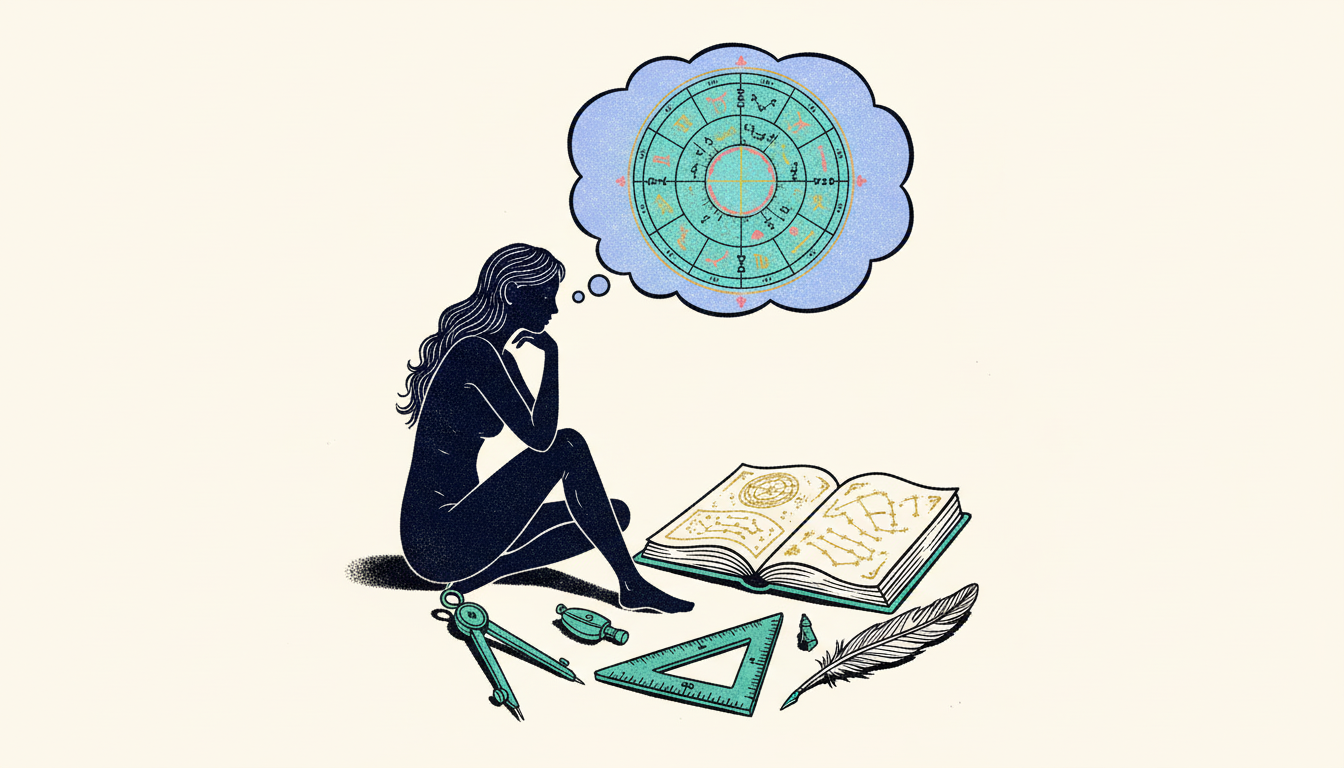
Your birth chart is a cosmic snapshot—a detailed map of the sky at the exact moment and location you were born. It reveals your natural talents, emotional patterns, relationship dynamics, and life purpose. But reading it requires understanding the language of astrology.
If you've ever stared at your chart and felt overwhelmed by symbols, numbers, and lines, you're not alone. The good news? Learning how to read your birth chart in astrology is simpler than it seems. With the right framework, that confusing wheel transforms into a personal oracle.
Let's break down the complete system for reading your birth chart.
The Complete Birth Chart Reading Framework
Reading a birth chart effectively requires a structured approach. Think of it like learning a new language—you start with alphabet, move to words, then sentences, then full stories. The same applies to astrology.
Step 1: Gather Your Data
Before you can read anything, you need your birth chart. Generate one using:
-
Birth date (exact: month, day, year)
-
Birth time (as precise as possible—your birth certificate has this)
-
Birth location (city and country)
Get your free birth chart here
Without your exact birth time, you'll miss critical information about your Rising sign and house placements—about 40% of your chart's meaning. If you don't know your birth time, contact the hospital where you were born or check your birth certificate.
Step 2: Identify the Core Components
Every birth chart contains four essential elements:
The Zodiac Signs (12 energetic archetypes) The outer ring of your chart shows the 12 zodiac signs—each representing a distinct archetypal energy. These signs color how planets express themselves.
The Houses (12 life areas) Your chart divides into 12 wedge-shaped houses. Each house governs specific life domains: self, money, relationships, career, spirituality, etc. Houses are calculated from your birth location and time, making them deeply personal.
The Planets (10 primary forces) The Sun, Moon, Mercury, Venus, Mars, Jupiter, Saturn, Uranus, Neptune, and Pluto represent different dimensions of your psyche and experience.
The Aspects (geometric relationships between planets) Lines connecting planets show angles—called aspects—that reveal how different parts of your personality interact, harmonize, or conflict.

The Interpretation Framework: Layer by Layer
Layer 1: Start With Your Big Three
Your Sun, Moon, and Rising signs form your foundational triad. These three placements reveal your core personality architecture.
Your Sun ☉ (Core Identity) The sign where your Sun is placed reveals your essential self—your ego, life force, and conscious will. If your Sun is in Aries, you're driven and pioneering. In Taurus, you're grounded and sensual. In Gemini, you're curious and communicative.
Your Sun sign is who you are when you feel most authentically yourself.
Your Moon ☽ (Emotional Nature) Your Moon governs your inner world—emotions, instincts, and core needs. A Moon in Scorpio is intensely private. In Sagittarius, it's freedom-seeking. In Capricorn, it's emotionally disciplined.
Your Moon sign is who you are in private, what you need to feel safe.
Your Rising Sign (Ascendant)
Located on the left side of your chart (marked AC or ASC), your Rising sign is your zodiac sign on the 1st house cusp. This is how you appear to others and your demeanor.
Your Rising sign is the mask you wear, your interface with the world.
Layer 2: The Personal Planets
After your Big Three, examine Mercury, Venus, and Mars. These govern communication, love, and action.
Mercury ☿ — Communication and thinking style
Venus ♀ — Love, values, and attraction Mars ♂ — Drive, assertion, and desire
Layer 3: The Outer Planets
Jupiter ♃ (expansion and luck), Saturn ♄ (discipline and limits), and the slower-moving Uranus, Neptune, and Pluto represent deeper themes and generational energies.
Reading the Houses: Where Energy Flows
The 12 houses are the "where" of your chart. Even identical planetary placements produce different life experiences in different houses.
-
1st House: Self-image, physical body, first impressions (your "mask")
-
2nd House: Money, possessions, self-worth, material security
-
3rd House: Communication, siblings, learning, short journeys
-
4th House: Home, family, roots, private life, emotional foundation
-
5th House: Creativity, romance, children, pleasure, self-expression
-
6th House: Work, health, daily habits, service to others
-
7th House: Partnerships, marriage, close relationships, balance
-
8th House: Transformation, sexuality, shared resources, taboo subjects
-
9th House: Higher learning, philosophy, travel, belief systems
-
10th House: Career, public image, reputation, authority, legacy
-
11th House: Friendships, groups, social causes, community, hopes
-
12th House: Spirituality, unconscious mind, isolation, hidden aspects of self
When you find a planet in a house, you're seeing where that planetary energy will activate in your life. Mars in the 7th house? You bring passionate intensity to partnerships. Venus in the 8th? Your sexuality and depth transform how you connect intimately with others.

Understanding Aspects: Planetary Relationships
Aspects are angles between planets that reveal how different parts of yourself interact.
Conjunction (0°): Blended energies, intensity Sextile (60°): Harmonious, natural ease Square (90°): Tension, friction, growth through challenge
Trine (120°): Natural talent and ease Opposition (180°): Polarity, requires integration
Squares and oppositions create psychological depth—they're where you build strength.
Synthesis: Reading Your Chart as a Whole
The true art is synthesis—weaving individual placements into a coherent narrative.
Your process:
-
Big Three (foundation)
-
Personal planets (daily personality)
-
House placements (life areas)
-
Aspects (internal dynamics)
-
Look for themes and contradictions
Example: Aries Sun (bold) + Cancer Moon (emotional) = Warrior with a soft heart. Virgo Rising (reserved) + Leo Sun (expressive) = Modest demeanor with big personality underneath.
Your chart reveals potential, not fate. You have free will in expression.

Essential Reading Tips
-
Birth time matters: Without it, you can't accurately determine your Rising sign or houses
-
Start simple: Master the Big Three and personal planets before exploring advanced techniques
-
Look for stelliums: 3+ planets in one sign or house represent major life themes
-
Trust resonance: Your chart should feel true to your lived experience
-
Remember archetypes: Each placement represents universal energies, not fixed destiny
Next Steps in Your Astrological Journey
Once you're confident reading your natal chart, explore:
-
Transits: Current planetary movements activating your chart
-
Progressions: How your chart evolves and matures over time
-
Your North Node: Your soul's purpose and growth direction
-
Synastry: Relationship compatibility by comparing charts
-
Return Charts: Solar returns and lunar returns marking yearly/monthly chapters
But for now, focus on mastering your birth chart. It's the foundation for everything else.

Common Questions
Q: How long does it take to learn? A: Basic competency takes hours; mastery takes years.
Q: Can I read without my birth time? A: You'll miss 40% of your chart (Rising sign and houses).
Q: What if my chart doesn't match how I feel? A: You may not yet be living into certain placements. Give it time.
Q: Are there "bad" placements? A: No. Every placement contains both gifts and challenges. Even difficult aspects become strengths with conscious work.
Your Cosmic Blueprint Awaits
Now that you understand the framework for reading a birth chart in astrology, it's time to dive deeper into your own. Every placement tells a story about who you are and why you're here.
Generate your free birth chart now and start decoding the cosmic blueprint you were born with. Use this guide as your reference, and let your chart reveal the truth about your psyche.
Related Articles: