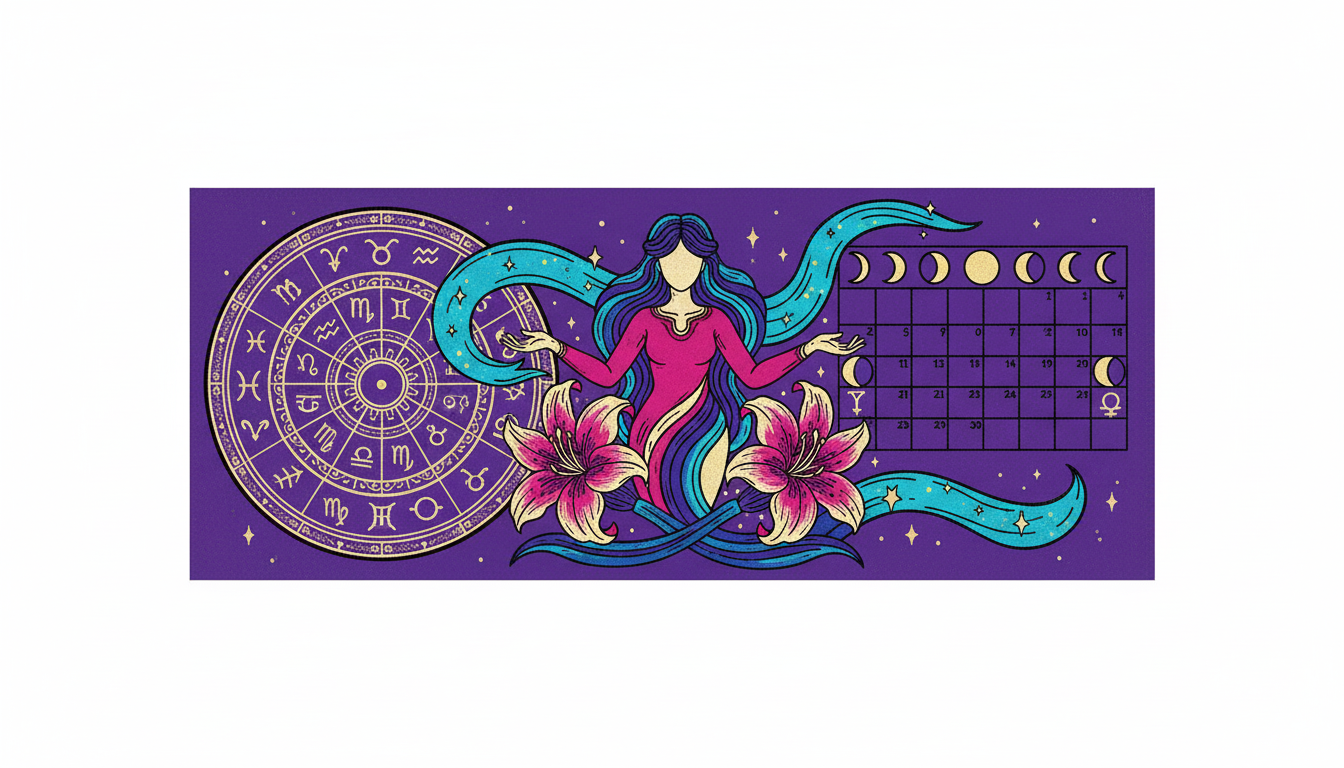
When you first explore astrology, two concepts come up constantly: your birth chart and your horoscope.
Many people think they're the same thing. They're not. But they're not completely separate either.
Your birth chart is a static map—a snapshot of the cosmos frozen at the moment you were born. Your horoscope is dynamic—a moving forecast of how current planetary movements interact with your chart.
Think of it this way: Your birth chart is your blueprint. Your horoscope is the weather.
The blueprint doesn't change. The weather does. But understanding both together gives you a complete picture of who you are and what's happening in your life right now.
This guide breaks down the relationship between birth chart and horoscope, what each reveals, their key differences, and most importantly—how to use them together for deeper insight into yourself and your path forward.
What Is a Birth Chart?
A birth chart (also called a natal chart) is a map of the sky at the exact moment and place you were born. It shows the positions of all the planets, the Sun, the Moon, and the angles they form to each other.
Key characteristics of a birth chart:
-
It's unchanging. Your birth chart is frozen in time. It's the same today as it was when you were born.
-
It's deeply personal. Even two people born on the same day, in the same hospital, can have completely different birth charts if their birth times differ by even a few hours.
-
It reveals your core personality. Your Sun sign shows who you are. Your Moon sign shows your emotional nature. Your Rising sign shows how others perceive you. Together, they form your "Big Three" and provide the foundation for understanding yourself.
-
It shows your whole self. Your birth chart contains 10 celestial bodies, 12 zodiac signs, 12 houses (life areas), and numerous aspects (angles between planets). It's a comprehensive psychological and spiritual profile.
When you generate your birth chart, you see a wheel divided into 12 sections. Each section represents different areas of life: self, finances, communication, home, creativity, relationships, career, spirituality, and so on. The planets, signs, and angles within these sections reveal where you're naturally gifted, where you'll struggle, what you value, and what drives you.
Your birth chart answers: "Who am I?"

What Is a Horoscope?
A horoscope is a forecast based on current planetary movements and how they interact with your birth chart.
When planets move through the sky (which they do constantly), they eventually reach the same positions they held when you were born, or they form angles to those positions. These movements are called transits, and they activate different areas of your birth chart in real time.
A horoscope translates these movements into practical language: what to expect in the coming day, week, month, or year; which life areas will be most active; what challenges or opportunities might appear; and how the cosmic weather is influencing you.
Key characteristics of a horoscope:
- It's always changing. The planets move through the zodiac at different speeds. Mercury completes a full cycle every 88 days. The Moon changes signs roughly every 2-3 days. Saturn takes 29 years. These movements shift the horoscope constantly.
- It's time-sensitive. A horoscope for today is different from a horoscope for next month or next year.
- It's predictive. Horoscopes show what's coming, what themes are active, and where to focus your attention and energy.
- It's universal and personal. General horoscopes apply to your Sun sign (or all 12 signs). But a more accurate horoscope uses your entire birth chart—your Moon sign, Rising sign, and all planetary placements.
Your horoscope answers: "What's happening now, and what should I know?"
Birth Chart vs. Horoscope: The Key Differences
To use both effectively, you need to understand how they differ.
| Aspect | Birth Chart | Horoscope | |--------|-------------|-----------| | Time frame | Fixed (birth date) | Dynamic (current/upcoming period) |
| What it shows | Who you are fundamentally | What's active in your life right now | | Changes | Never | Constantly (as planets move) | | Accuracy | Requires exact birth time | Works with just birth date/sign | | Detail | Comprehensive personality profile | Focused forecast or theme |
| Purpose | Self-understanding, long-term insight | Navigation, timing, preparation |
Think of it like weather forecasting:
- Your birth chart is your geographic location and climate zone. It's fixed. You live there. It determines your general weather patterns. A person in Minnesota will always have a different climate than someone in Arizona.
- Your horoscope is the weather forecast. It changes daily. It tells you whether to bring an umbrella tomorrow or plan for sunshine.
You need to know both. Knowing your climate (birth chart) without the forecast (horoscope) means you're unprepared for daily conditions. Knowing the forecast without understanding your climate means you can't make good long-term plans.

How Birth Chart and Horoscope Work Together
This is where the real power comes in.
Your birth chart reveals your potential and your patterns. Your horoscope reveals the timing and activation of that potential.
Example: Venus Placement
Let's say your birth chart shows Venus in Gemini in your 7th house (the house of relationships).
What your birth chart tells you:
-
You're drawn to partners you can communicate with deeply
-
You need mental stimulation and variety in relationships
-
You're likely charming, flirty, and enjoy socializing
-
You value loyalty but also independence
-
You might struggle with commitment if you feel trapped
This is who you are in relationships—always.
Now, let's say Jupiter (the planet of expansion and luck) is currently transiting your Venus. The horoscope for this period might say:
What the horoscope tells you:
-
This is a favorable period for relationships
-
You might attract a significant person or deepening connection
-
It's a good time to invest in romance or social connections
-
Expect more invitations, dating opportunities, or relationship growth
-
Use this window wisely—it lasts several months
The birth chart gives you the architecture of how you love. The horoscope shows you when love is most likely to flourish.
Without your birth chart, the horoscope is generic: "Gemini, expect luck in love."
With your birth chart, it's specific: "Your Venus is being activated—and because Venus is in your 7th house and conjunct your North Node, this period is particularly significant for your relationship growth and destiny."
Example: Saturn Transit
Another example: Saturn is transiting your 10th house (career and public reputation).
What your birth chart context gives you:
-
Look at what's already in your 10th house
-
Look at your Sun sign (which rules career and purpose)
-
Look at your Saturn sign and natal Saturn placement
What the horoscope tells you:
-
Saturn transits take 2-3 years as they move through a house
-
Saturn is demanding but rewarding—it builds structure
-
This is a period of career consolidation, responsibility, and testing
-
Hard work now pays off for years to come
If your natal Saturn is weak or well-aspected, this transit will feel different. If your 10th house is packed with planets, this is extra significant. The birth chart details shape how you experience the horoscope timeline.
How to Use Both Effectively
Now that you understand the relationship, here's how to leverage both:
1. Know Your Birth Chart Foundation
Before consulting horoscopes, understand your birth chart:
-
Generate your free natal chart with your exact birth time
-
Learn your Big Three (Sun, Moon, Rising)
-
Identify major planetary placements and themes
-
Notice where planets are concentrated (that's where you focus energy)
-
Understand your strengths and challenges
This is your reference point. Everything else builds from here.
2. Read Horoscopes With Your Chart in Mind
Don't just read generic horoscopes for your Sun sign. Instead:
-
Understand what current transits are happening
-
Check which houses these transiting planets are moving through in your chart
-
Notice what planets they're activating in your chart
-
Combine the generic horoscope with your personal chart details
Example: Mercury retrograde is happening. A generic horoscope says "communication mishaps possible." But if Mercury retrograde is happening in your 8th house (intimacy, shared resources, transformation), the impact is different than if it's in your 3rd house (communication, siblings, short trips). Your birth chart tells you where to focus and how to prepare.
3. Look for Activation Points
Your birth chart contains your potential. Your horoscope shows which parts are being activated right now.
When a transiting planet:
- Conjuncts a natal planet (sits on top of it) = that area of life is strongly activated
- Trines a natal planet (forms a 120° angle) = opportunities and ease
- Squares a natal planet (forms a 90° angle) = challenges and growth
- Opposes a natal planet (forms a 180° angle) = awareness and balance
Pay attention to these moments. They're cosmic weather events affecting your chart directly.
4. Plan Around Your Horoscope
Your birth chart is static, but you have agency. Use the horoscope to time your actions:
-
Avoid major decisions during Mercury retrograde if Mercury rules something important in your chart
-
Launch projects when Jupiter or Sun aspects favor them
-
Work on difficult issues (therapy, shadow work) when Saturn aspects activate your chart
-
Invest in love and creativity when Venus and Sun aspect your 5th or 7th houses
Astrology isn't destiny. It's a tool for timing and understanding. You still have free will. But working with the cosmic weather is more effective than working against it.
5. Track Your Transits Regularly
Make it a practice to:
- Check what major transits are happening this month/year
- See where those transits fall in your personal chart
- Understand the themes being activated
- Adjust your focus and energy accordingly
Many astrologers recommend reviewing your chart every quarter or every month, especially during significant transits like Saturn returns, Jupiter returns, Uranus oppositions, or Pluto transits.

The Ultimate Truth: You Need Both
Your birth chart without a horoscope is like having a map of the terrain but no awareness of current weather, traffic, or road conditions. You understand yourself but not the timing of your life.
Your horoscope without a birth chart is like checking the weather without knowing your location. A prediction about "Aries" might not apply to you if your Aries planets are in a weak position, or if other chart factors override them.
Together, they create a complete picture:
-
Birth chart = "I'm someone who values deep connection and security in relationships."
-
Horoscope = "Right now, transiting Venus is activating my 7th house, which suggests a relationship opportunity or deepening."
-
Integration = "Given who I am (birth chart) and what's happening (horoscope), I should invest in my relationship now. This is a favorable window."
The magic happens at the intersection.
Common Questions
Q: Is my horoscope accurate? A: Horoscopes range from generic (daily Sun sign predictions) to highly specific (personalized transits based on your birth chart). The more detailed your horoscope is, and the more it references your personal chart, the more accurate it will be.
Q: How far ahead can horoscopes predict? A: Major transits can be predicted years in advance. A Saturn return or Uranus opposition can be identified and explored months or years before it becomes exact. But day-to-day predictions become less certain the further ahead you go.
Q: What if my horoscope says something "bad"? A: Difficult transits aren't bad—they're active. A Saturn square to your Venus might bring relationship challenges, but it also offers deep learning and growth. Use the horoscope as information, not as fate. Your choices matter.
Q: Can I read my horoscope without knowing my birth time? A: Yes, if you focus on Sun sign horoscopes and major transits. But for accuracy, your birth time matters because it determines your Rising sign and houses. With your birth time, your horoscope becomes far more personal and precise.
Key Takeaways
-
Your birth chart is your cosmic blueprint—it never changes and reveals who you fundamentally are
-
Your horoscope is your cosmic weather—it changes constantly and shows what's active right now
-
Together, they provide complete self-understanding: who you are + what's happening
-
Use your birth chart as context for reading horoscopes
-
Track transits in relation to your personal chart for maximum insight and timing
-
Astrology is a tool for self-understanding and timing, not destiny

Ready to Dive Deeper?
Understanding your birth chart and horoscope together is the foundation of working with astrology as a transformational tool.
Start by generating your free natal chart if you haven't already. Then, explore what transits are active in your chart right now. The combination will reveal so much.
Related Articles: