Here is the direct answer first. A birth chart cannot tell you which profession is right for you. It can't measure aptitude, confirm qualifications, predict pay, judge your chances of being hired or tell you whether a move is safe. Those answers come from the work itself, the people who do it, the offer on the table and your own circumstances.
What a chart can do, if you enjoy astrology, is give you a few symbolic questions to ask while you compare real options. Used that way, it's a prompt for reflection rather than a verdict.
A disclosure: Lunara sells automated written birth chart readings, and this guide was written with AI assistance. It isn't career, financial or psychological advice.
Compare workdays, not job titles
Most career astrology starts with a list: this sign suits law, that one suits design. The trouble is that a job title says very little about how your days are actually spent.
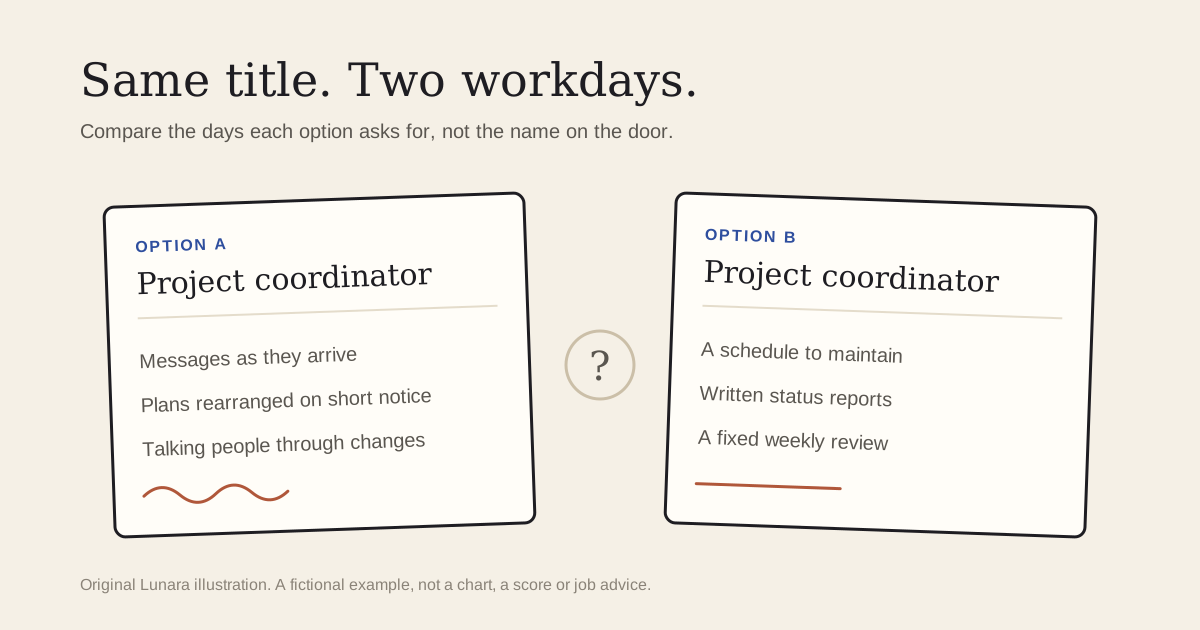
Take a fictional example. Two offers carry the same title, project coordinator.
- Option A: a small team. Most of the day is spent answering messages as they arrive, rearranging plans when something slips and talking people through changes, often on short notice.
- Option B: a larger organisation. Most of the day is spent maintaining a schedule, writing status reports and preparing for a fixed weekly review, with long stretches of quiet desk work.
Same title, very different workdays. Comparing the days tells you far more than the title, and it's the comparison the worksheet below is built for.
Three placements as questions, not answers
If you already have your chart, three placements make good prompts for this kind of comparison. Treat the sign as a starting point for a question. It isn't a list of abilities, and it doesn't fix your character.
Sun: chosen priorities. In Lunara's readings the Sun is about direction: what you choose to put first. Ask: in which of these two workdays would my actual priorities get time, and which priorities am I carrying only because they're expected?
Mercury: communication and learning. Mercury is a prompt about how you take in information and exchange it. Ask: how does each day expect me to communicate, in quick messages, long documents or meetings, and what would I need to learn in the first months?
Saturn: responsibility and limits. Saturn is a prompt about commitments and boundaries. Ask: what would I be responsible for in each role, what limits would I need around it, and which of those limits is the job likely to respect?
None of these questions has an astrological right answer. Their usefulness is that they send you back to the real details of each option.
If you don't know your birth time
Career astrology often leans on the Midheaven and the tenth house. Both depend on an accurate birth time, so if you don't have one, leave them out. Don't guess a time to make them appear, and don't try to work one backwards from events in your life.
Without a clock, the Sun, Mercury and Saturn signs are usually still usable. On a day when one of them changes sign, though, the sign stays uncertain, so hold that question loosely. Our guide to a birth chart without a birth time explains what holds and what stays open.
If your question is narrower, such as whether to sign an offer while Mercury is retrograde, that's a different guide: a job offer during Mercury retrograde walks through reading the terms rather than the omen.
One real excerpt from the sample reading
Lunara's public sample reading is built for a fictional person born on January 1, 1990, in London, with a Capricorn Sun. It's produced by the same automated report builder as a personal reading, and it isn't a career-specialist report. Here is the reflection question its Sun chapter asks:
Which goal on your current list did you choose yourself, and which one are you pursuing mainly because it was expected of you?
That's the kind of question you can carry into a work decision. It doesn't say which job to take. It asks which of the goals behind the decision is really yours.
Choose one thing to find out
Comparison only helps if it leads to better information. After filling in both options, choose one information-gathering step yourself. For example, you might ask someone already in the role what last Tuesday looked like, or ask the hiring manager what the first ninety days involve. You might also reread the written terms for hours and on-call expectations.
There's no score at the end and no automatic verdict. If the comparison is still even, that's useful too. It tells you which question to ask next.
The worksheet, in plain text
The interactive worksheet below the article does the same thing as this list. If it doesn't load, use paper or a notes app.
- Write a label for each option, such as Option A: small team and Option B: larger organisation. You don't need an employer's name.
- For each option, write a few lines under four headings:
- Actual workday: what a typical day involves, hour by hour if you can.
- Conditions I need: what has to be true for you to do this work well, such as quiet time, a predictable schedule or a commute you can sustain.
- Skill evidence or gap: something you've already done that shows you can handle this, or a gap you'd need to close.
- Question to ask: one thing you don't yet know and could find out.
- Read the two columns side by side. Choose one question from either column and decide how and when you'll ask it.
You don't need birth details, private information about an employer or anyone else's personal details to use it.
If you'd like to go further
To see your own placements, calculate your free birth chart. If you don't know your birth time, leave it blank rather than guessing.
An automated personal birth chart reading is optional and paid. It has a chapter for each placement, each with reflection questions and a small practice. It doesn't score careers, recommend a job or include a live consultation. Read the complete sample reading before deciding; the current price for your country is shown before you pay.