Originally published 15 January 2026. Rewritten and reviewed 14 October 2026: the earlier version made claims about other apps and about Lunara's own features that we couldn't support, so they've been removed.
Lunara wrote this guide, and Lunara sells an optional automated birth chart reading. That's a commercial interest, so read what follows as one site's explanation, not an independent review. The text was written with AI assistance. We haven't tested or ranked other services, and there's no "best" list here.
What we can do is help you work out which kind of interpretation fits what you want to know. If you'd like a readable explanation of your chart, not just a wheel full of symbols, that choice matters more than the brand.
Three things called "interpretation"
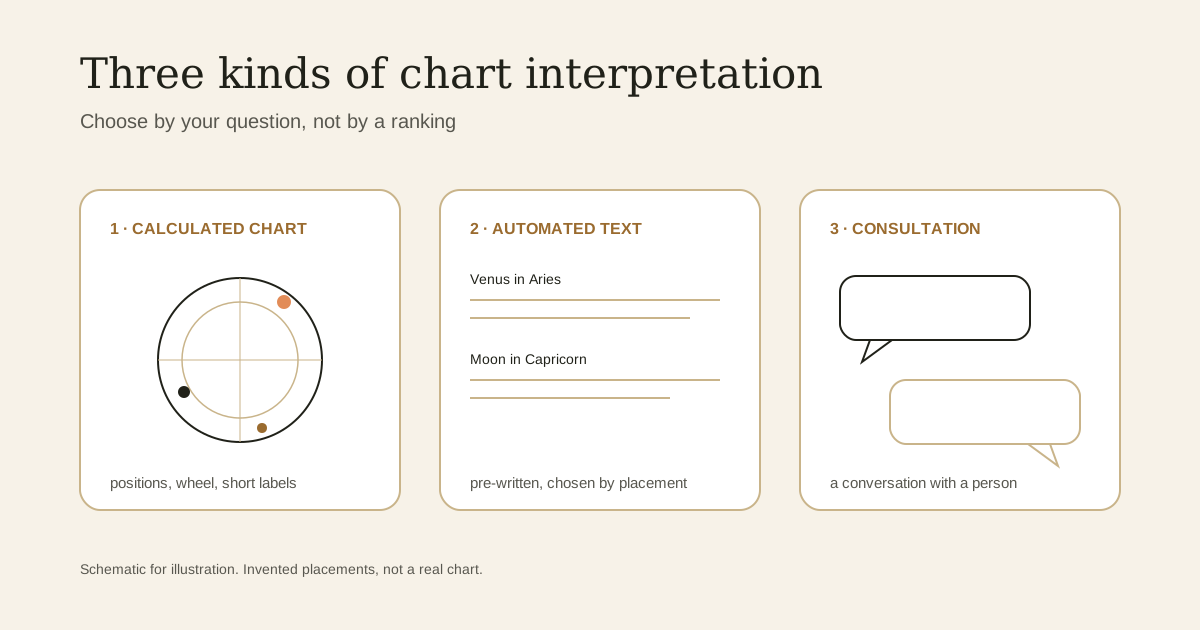
People search for a "natal chart interpretation" and get very different things back. Most of them fall into one of three kinds.
1. A calculated chart. Software works out where the Sun, Moon and planets were at your birth. With a reliable birth time and place it also finds your Rising sign (Ascendant) and houses. You get positions, a wheel and usually short labels. This part is arithmetic, and it's what almost every free tool does first.
2. Automated placement text. The software then adds written interpretation for what it found: Venus in Aries, Moon in the 4th house, and so on. Some services select pre-written placement paragraphs; others generate text from chart data. Either is automated; a longer answer does not mean an astrologer wrote or reviewed it.
3. A human consultation. A practising astrologer looks at your chart and talks with you. They can ask what's going on in your life and respond to your answers. That's a conversation, not a document, and it's a different kind of service. Lunara doesn't offer it.
None of these is "the real one". They answer different needs.
What two free tools say they offer
We looked only at the official public pages below, on 14 October 2026. We didn't create accounts, enter birth details or run a chart on either site. This describes what each page says it offers. It isn't a judgment of quality.
Cafe Astrology free natal chart report
- Kind: automated placement text.
- What the page describes: a free report listing planet signs, house positions and aspects, with written interpretations of the main factors.
- Without a birth time: the form offers an unknown-birth-time option. With it, time-sensitive factors such as the Ascendant and house positions are left out.
- Free and paid: this report is presented as free. The site also sells separate forecast reports.
Astrodienst AstroClick Portrait
- Kind: automated placement text, explored one piece at a time.
- What the page describes: an interactive chart. You click individual chart elements that interest you, in any order, to see their interpretation. The page says Robert Hand's texts are mainly written for children and teenagers, and most link to an alternative interpretation by Robert Pelletier aimed at adults.
- Free and paid: it's listed in astro.com's Free Horoscopes section.
Sources: cafeastrology.com/free-natal-chart-report.html and the AstroClick Portrait page on astro.com, both accessed 14 October 2026.
What Lunara's free chart includes
To be equally specific about our own:
- Calculation: Swiss Ephemeris, tropical zodiac, Placidus houses. No sign-up is needed, and only the birth date is required.
- With a recorded time and a chosen city: a chart wheel; your Sun, Moon and Rising signs with degrees; each planet's sign, degree and house; the houses with short themes; an element and mode balance; aspects; and patterns such as stelliums if your chart has any.
- Short labels, not a written reading: the free page gives brief traditional themes, plus links to free pages on your Sun, Moon and Rising placements. It doesn't write paragraphs that join your placements together.
Lunara's chart uses one house system, Placidus. If you want to see how a different system changes your houses, the Whole Sign vs Placidus comparison shows both side by side.
The birth time decides what any reading can say
Your Rising sign and houses depend on the clock time and place of birth. The Ascendant moves through a whole sign in about two hours, so a guessed or rounded time can change it, and with it every house.
That's true for any service, free or paid. Before comparing interpretations, check which of these you have:
- A recorded time from a birth certificate or hospital record. Rising sign and houses are worth reading.
- No reliable time. Leave it blank rather than guess. On Lunara the chart becomes date-only: no Rising sign, no houses and no wheel. If the Moon changed sign during your local birth day, the page shows both possible signs, such as "Gemini / Cancer", rather than picking one. Any interpretation of your Rising sign or houses would be built on a guess, so skip those parts wherever you read them.
If your time falls in a daylight saving change, our guide to daylight saving time and your birth chart explains what to enter.
Placement keywords vs a combined reflection
Here's the practical difference between short labels and a written reading, using an invented chart. It isn't a real person's and wasn't calculated.
Suppose the chart has Venus in Aries and Moon in Capricorn.
Separate placement keywords might read:
- Venus in Aries: direct about attraction, quick to show interest.
- Moon in Capricorn: reserved with feelings, self-reliant under stress.
Each line is fine on its own. But they sit side by side, and it's left to you to connect them.
A combined reflection puts the two together and turns them into a question: quick to show interest, slower to show need. When someone you like asks how you're really doing, do you answer, or change the subject to plans?
The second version isn't more accurate. Both come from the same symbolism. It's just easier to test against your own life, because it asks about a real situation. If it doesn't fit, that's a useful answer too.
How to choose
Don't start with the tool. Start with what you want to understand.
- Pick one or two questions. For example: "How do I handle conflict?" or "What does my Moon sign say about rest?" One or two is enough. A whole chart at once is hard to take in.
- Check your time first. If the question involves your Rising sign or houses, you need a recorded birth time.
- Choose the kind that fits. A calculated chart is enough to find out what your placements are. Automated text helps if you want traditional meanings in plain words. A consultation suits you if you want to talk it through and be asked questions back.
- Compare like with like. If you try two sites, use the same birth details and the same zodiac, and note which house system each uses. Different settings can produce different houses, which can look like a disagreement when it isn't one.
- Keep what fits, drop what doesn't. Your experience takes priority over the text.
And keep one limit in mind. A reading is symbolism. It isn't a diagnosis, a prediction or a way to know what someone else thinks or feels. If you're reading a partner's or a friend's chart, treat it as a prompt for a conversation with them, not a conclusion about them.
Where the paid reading fits
The main step is free: calculate your free birth chart and look up the placements behind your one or two questions.
Optional and paid: if you then want the written version for your own chart, Lunara's personal birth chart reading is an automated report. It's built from the same calculation and assembled from pre-written interpretation copy that matches your placements, including a chapter that reads pairs of placements together. No astrologer writes or reviews it, and it isn't a consultation. Read the complete sample reading first. It's built for a fictional birth, not a customer's chart, so it shows the format rather than what your own would say. What's included and the price are shown before you pay.
If you'd rather talk to someone, a human consultation is the right kind of reading for you. Lunara doesn't provide one, and that's a perfectly good reason not to buy from us.