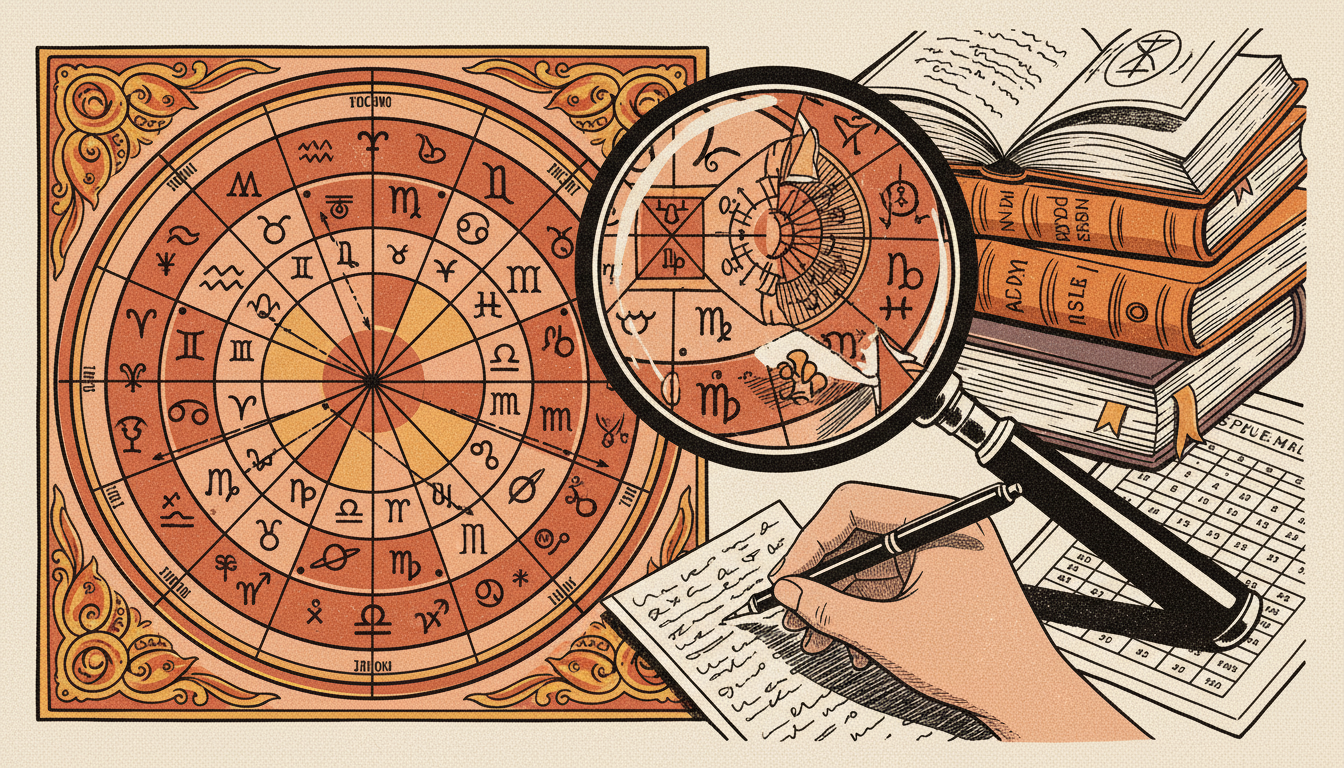
You've calculated your birth chart. You know your sun, moon, and rising signs. But how do you move beyond isolated facts to a coherent, meaningful analysis of your complete chart?
Birth chart analysis is the process of systematically examining all elements of a natal chart—planets, signs, houses, aspects, and patterns—to create a comprehensive understanding of someone's personality, life path, relationships, and potential.
This isn't fortune-telling or vague generalities. Professional birth chart analysis is a structured method that reveals startlingly accurate insights about who you are, why you're here, and how to navigate your life most effectively.
In this comprehensive guide, we'll walk through exactly how professional astrologers analyze birth charts, what they look for, how they synthesize information, and how you can start analyzing charts yourself with confidence and depth.
What Is Birth Chart Analysis?
Birth chart analysis is the systematic interpretation of a natal chart. It involves:
-
Examining individual placements (planets in signs and houses)
-
Identifying aspects (relationships between planets)
-
Recognizing patterns (stelliums, elemental emphasis, chart shapes)
-
Synthesizing information into a coherent narrative
-
Contextualizing based on life stage, questions, and circumstances
The goal isn't to memorize isolated meanings. It's to see the chart as a living system—a map of consciousness and potential.

The Foundation: Key Elements of Analysis
Every thorough birth chart analysis examines these core components:
1. The Luminaries (Sun and Moon)
Sun: Conscious identity, life force, ego, vitality Moon: Emotional nature, unconscious patterns, needs, instincts
These two form your foundational polarity:
- Sun = what you're becoming
- Moon = where you're coming from
Analyzing their sign, house, and aspects reveals your core self.
2. The Ascendant (Rising Sign)
The zodiac sign on the eastern horizon at your birth moment.
What it reveals:
-
How you approach life and new situations
-
Your outward personality and first impressions
-
Your physical appearance and energy
-
Your life path and personal style
The Ascendant's ruling planet (your chart ruler) is especially significant in analysis.
3. Personal Planets (Mercury, Venus, Mars)
These fast-moving planets shape your daily experience:
Mercury: How you think, communicate, learn, process information
Venus: How you love, what you value, what brings pleasure Mars: How you take action, assert yourself, pursue desires
Analyzing their placement reveals how you operate in the world practically.
4. Social and Transpersonal Planets
Jupiter: Where you grow, find meaning, experience luck
Saturn: Where you face challenges, build mastery, learn discipline Uranus, Neptune, Pluto: Generational themes, but house placement personalizes them
5. Houses
The 12 life areas where planetary energy operates. House placement answers "where?" for each planet.
6. Aspects
Angular relationships between planets. Aspects show how different parts of your psyche interact—harmoniously or through tension.
7. Patterns and Configurations
Stelliums, T-squares, Grand Trines, Yods—these special formations reveal major life themes.
The Professional Analysis Process: Step by Step
Here's how experienced astrologers approach birth chart analysis:
Step 1: First Impression—Chart Shape and Distribution
Before diving into details, look at the overall chart:
Planetary Distribution:
-
Above/Below horizon: Focus on outer world vs. inner world
-
East/West: Self-directed vs. other-directed
-
Concentrated in one area: Focused life theme
-
Evenly distributed: Balanced, multifaceted person
Chart Shapes:
-
Bowl: Contained, self-sufficient
-
Bucket: One planet opposing others = focal point
-
Bundle: Concentrated energy, specialized
-
Locomotive: Strong drive, leadership
-
Splay: Individualistic, unconventional
This gives context before analysis.
Step 2: The Ascendant and Chart Ruler
Identify the Rising Sign: What sign is on the cusp of the 1st house?
Find the Chart Ruler: The planet that rules that sign.
Example:
-
Gemini Rising → Mercury is chart ruler
-
Mercury in Scorpio in 6th house → Life path involves deep investigation (Scorpio) in health, work, or service (6th house)
The chart ruler is a major key to the entire chart.
Step 3: Sun, Moon, and Their Relationship
Analyze:
-
Sun's sign and house: Core identity and where it shines
-
Moon's sign and house: Emotional nature and what creates security
-
Aspect between Sun and Moon: Internal harmony or tension
Example:
-
Sun in Aries in 10th house: Identity through bold career leadership
-
Moon in Cancer in 1st house: Needs emotional security, nurturing approach
-
Sun square Moon: Internal tension between ambition (Sun) and security (Moon), creates dynamic but challenging inner life
Step 4: Personal Planets (Mercury, Venus, Mars)
For each, note:
-
Sign: How it operates
-
House: Where it operates
-
Aspects: How it connects to other planets
Example—Venus Analysis:
-
Venus in Capricorn: Values loyalty, seriousness, commitment in love
-
5th house: Love expressed through creativity, romance, possibly children
-
Venus trine Saturn: Mature, responsible love; relationships improve with time
-
Venus square Uranus: Need for freedom in relationship; unconventional attractions
Synthesis: This person values commitment but needs freedom—a creative tension in relationships.
Step 5: Jupiter and Saturn—Growth and Lessons
Jupiter shows where life expands easily. Saturn shows where you face challenges but gain mastery.
Example:
-
Jupiter in Sagittarius in 9th house: Natural luck with travel, education, philosophy
-
Saturn in 7th house in Pisces: Relationship lessons, fear of vulnerability, but potential for spiritual partnership
Step 6: Outer Planets (Uranus, Neptune, Pluto)
These are generational, but house placement personalizes them:
Example:
- Pluto in 4th house: Transformation through family, intense home life, possibly secrets or power dynamics in family
Step 7: Aspect Analysis
Aspects show how planets interact. Focus on:
Tight aspects (within 1-3 degrees): Most powerful Multiple planets involved: Complex dynamics
Types:
- Harmonious (trines, sextiles): Talents, ease
- Dynamic (squares, oppositions): Tension, growth
- Intense (conjunctions): Fusion, emphasis
Example:
- Sun conjunct Mercury: Identity and communication fused; articulate self-expression
- Moon square Saturn: Emotional restriction, but also emotional maturity
- Venus trine Neptune: Romantic, artistic, idealistic in love
Step 8: Identify Major Patterns
Stellium (3+ planets in one sign/house):
Major life theme requiring emphasis.
T-Square (two planets oppose, both square a third): Intense dynamic tension driving achievement.
Grand Trine (three planets 120° apart):
Natural talent, sometimes too easy (lack of motivation).
Yod (two planets sextile, both quincunx a third): "Finger of God"—fated theme requiring adjustment.
Example:
Stellium in Capricorn in 10th house = Career, achievement, public life are central. This person's purpose involves professional mastery and leadership.
Step 9: Synthesis and Integration
Now the art begins. Weave all elements into a coherent narrative:
Ask:
-
What are the major themes?
-
Where do contradictions exist? (They're real—people are complex)
-
What patterns repeat?
-
What does this person need for fulfillment?
-
What challenges will they face?
-
What strengths can they leverage?
Example Synthesis:
"This chart shows someone with a bold, pioneering identity (Aries Sun) who needs deep emotional security (Cancer Moon). The Sun-Moon square creates internal tension between independence and need for home/family. Mercury in Aries suggests quick, direct thinking, but Mercury square Neptune adds confusion or artistic imagination. Venus in Capricorn seeks serious commitment, while Mars in Gemini pursues variety. The challenge: balancing need for security with drive for independence, and commitment with variety. The solution: Finding partners who offer both stability and freedom, and career that allows bold leadership while honoring emotional needs."
See how it creates a person, not just a list of traits?
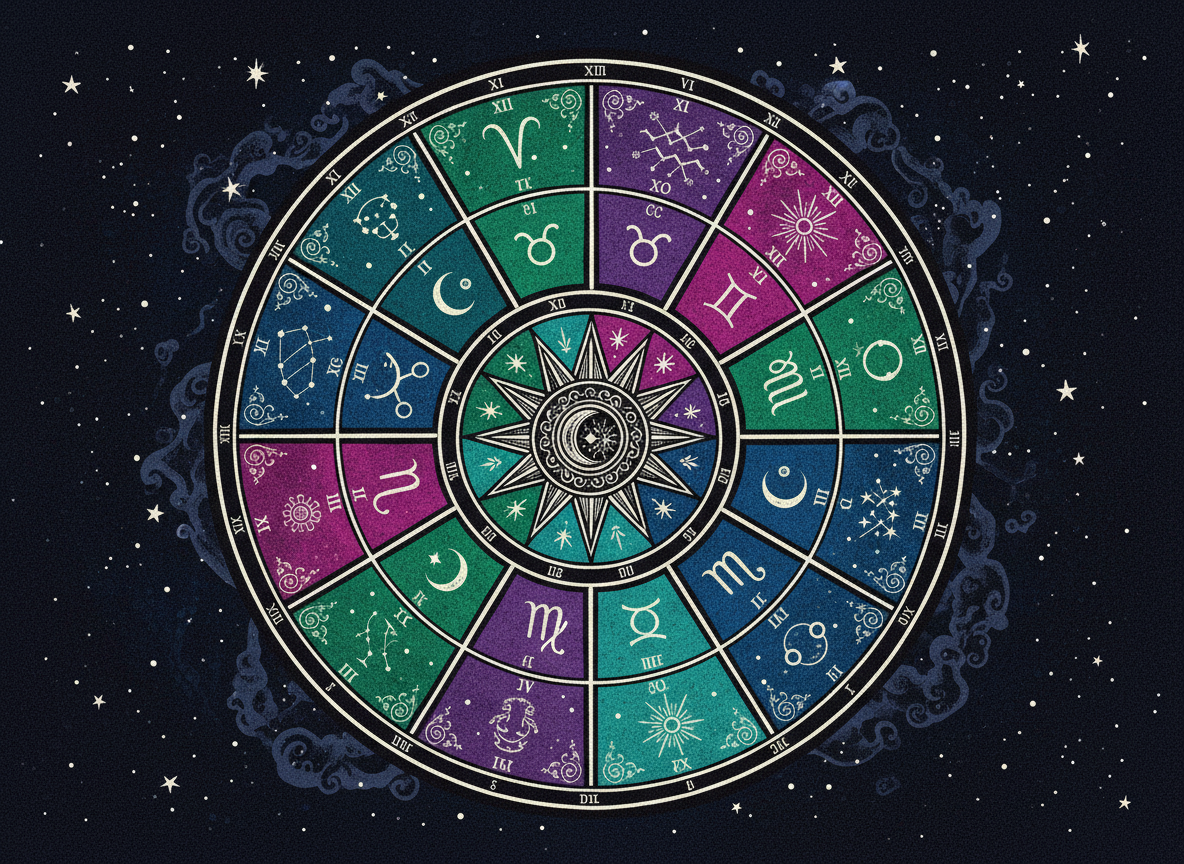
Type: Process Diagram Dimensions: 1200x800 Alt Text: Birth chart analysis workflow from data to synthesis
Description: Flowchart-style diagram showing the analysis process. Top: Birth data input. Flowing down through stages: 1) Chart calculation, 2) Element identification (planets, signs, houses), 3) Aspect analysis, 4) Pattern recognition, 5) Synthesis. Each stage has small illustrative icons. Bottom: final output = comprehensive personality profile. Style: Clean, professional, instructional. Color palette: White background, purple flow lines, gold stage markers, teal icons, clear dark text. Priority: High File Name: birth-chart-analysis-process.jpg Priority: High
Advanced Analysis Techniques
Once you've mastered basics, professional astrologers use these advanced methods:
1. Sect (Day vs. Night Charts)
Was the person born during the day (Sun above horizon) or night (Sun below)?
Day charts emphasize Sun, Jupiter, Saturn. Night charts emphasize Moon, Venus, Mars.
2. Planetary Dignity
Is a planet in its domicile (home sign), exaltation (strong), detriment (weak), or fall (challenged)?
Example:
- Mars in Aries (domicile) = strong, natural expression
- Mars in Libra (detriment) = challenged, indirect action
3. Dispositor Chains
Follow the ruling planet of each placement to see how energy flows through the chart.
Example:
- Sun in Virgo → Mercury rules → Mercury in Leo → Sun rules → loop = mutual reception
4. Arabic Parts (Lots)
Mathematical points calculated from key chart positions. Part of Fortune is most common.
5. Progressed and Solar Arc Charts
Your natal chart "progresses" symbolically as you age, showing inner development.
6. Transits and Cycles
Analyze current planetary movements relative to natal positions to time events and themes.
Common Analysis Mistakes to Avoid
1. Cookbook Interpretation
Don't just look up "Sun in Leo" and recite memorized keywords. Consider the whole context.
2. Ignoring Contradictions
Charts often show contradictory traits. That's realistic. Acknowledge complexity rather than forcing consistency.
3. Being Fatalistic
Charts show potentials and patterns, not fixed outcomes. Emphasize growth and choice.
4. Overwhelming with Information
Focus on major themes. Don't drown someone in 50 minor details.
5. Projection
Don't assume your experience is universal. A Scorpio Moon feels different to you than to someone else.

Birth Chart Analysis for Different Life Areas
Tailor your analysis based on what someone wants to understand:
Personality and Identity
Focus on: Sun, Moon, Rising, 1st house, chart ruler
Relationships and Love
Focus on: Venus, Mars, 7th house, aspects to these, Juno (asteroid)
Career and Life Purpose
Focus on: Midheaven (MC), 10th house, Sun, Saturn, North Node
Emotional Patterns and Healing
Focus on: Moon, 4th house, 12th house, Chiron
Communication and Learning
Focus on: Mercury, 3rd house, 9th house
Finances and Resources
Focus on: 2nd house, 8th house, Venus, Jupiter
Spirituality and Higher Meaning
Focus on: 9th house, 12th house, Neptune, Jupiter
Sample Birth Chart Analysis
Let's analyze a complete chart:
Birth Data: June 5, 1985, 9:15 AM, Chicago, IL
Ascendant: Leo Rising
-
Chart ruler: Sun
-
Appears confident, warm, creative, seeks recognition
Sun in Gemini in 11th house:
- Identity through ideas, communication, friendships, social causes
- Needs intellectual stimulation and social connection
Moon in Scorpio in 4th house:
- Deep emotional intensity, private feelings
- Needs emotional security through home and intimate connections
- Possible intense family dynamics
Mercury in Gemini in 11th house (conjunct Sun):
- Brilliant communicator, networker, idea generator
- Thinks quickly, socially, innovatively
Venus in Taurus in 10th house:
- Values stability, beauty, material comfort
- Love and values expressed through career/public life
- Attracts success through charm and aesthetic sense
Mars in Gemini in 10th house:
- Takes action through communication, variety, intellectual pursuits
- Drives career through versatility and ideas
Sun conjunct Mercury: Fused identity and communication; articulate, mentally focused
Moon square Venus: Tension between emotional needs (deep intimacy) and values (stability); security vs. comfort
Venus trine Saturn in Virgo: Mature, responsible approach to love and career; success through discipline
Major Theme: Stellium in Gemini in 11th house (Sun, Mercury, Mars) = Core identity centered on communication, ideas, social networks, causes
Synthesis:
"This person is a natural communicator and networker (Gemini stellium in 11th). Identity is expressed through ideas, friendships, and possibly social activism or technology. They appear confident and charismatic (Leo rising) and are driven to create impact through communication and innovation.
Emotionally, there's depth and intensity (Scorpio Moon in 4th) that contrasts with their light, intellectual exterior. They need deep emotional bonds despite social extroversion.
Career involves communication, beauty, and stable achievement (Venus and Mars in 10th, Venus in Taurus). They're charming and attractive in public roles.
The challenge: balancing social/intellectual focus with deep emotional needs. Surface friendliness vs. need for intimate connection. The solution: Careers that combine communication with emotional depth (counseling, psychology, investigative journalism) and relationships that honor both intellect and feeling."

Tools for Birth Chart Analysis
Software
- Solar Fire (professional standard)
- Astro Gold (mobile)
- Astro.com (free online)
Books
-
The Inner Sky by Steven Forrest
-
The Twelve Houses by Howard Sasportas
-
Aspects in Astrology by Sue Tompkins
-
The Changing Sky by Steven Forrest (transits)
Free Chart Analysis
Calculate your natal chart with automated interpretation to get started.
Key Takeaways
-
Birth chart analysis systematically examines planets, signs, houses, aspects, and patterns
-
Start with Ascendant and chart ruler, then Sun and Moon
-
Add personal planets, then social/outer planets
-
Aspects show how planetary energies interact
-
Synthesis creates a coherent narrative from individual pieces
-
Charts reveal potentials and patterns, not fixed destinies
-
Context and free will matter—astrology is a map, not a mandate
Frequently Asked Questions
Q: How long does a professional birth chart analysis take? A: Written reports take 2-5 hours for astrologers to prepare. Live readings are typically 60-90 minutes. Learning to analyze your own chart proficiently takes months of study.
Q: Can I analyze my own birth chart accurately? A: Yes, with study and practice. The challenge is objectivity. Combine self-analysis with occasional professional readings for blind spots.
Q: What's the difference between chart reading and chart analysis? A: "Reading" often means basic interpretation. "Analysis" implies deeper, systematic examination with synthesis. Practically, they're often used interchangeably.
Q: How accurate is birth chart analysis? A: When done skillfully with accurate birth data, analysis is remarkably accurate for personality patterns, tendencies, and life themes. It doesn't predict specific events but reveals underlying dynamics.
Q: Do I need exact birth time for analysis? A: For complete analysis—yes. Without birth time, you lose houses and Ascendant, which is roughly 40-50% of the chart. You can still analyze planetary signs and aspects.
Get your complete birth chart analysis
Stop wondering about your cosmic blueprint. Calculate your birth chart now and discover your complete astrological profile—sun, moon, rising, and all planetary placements.
Related Articles: