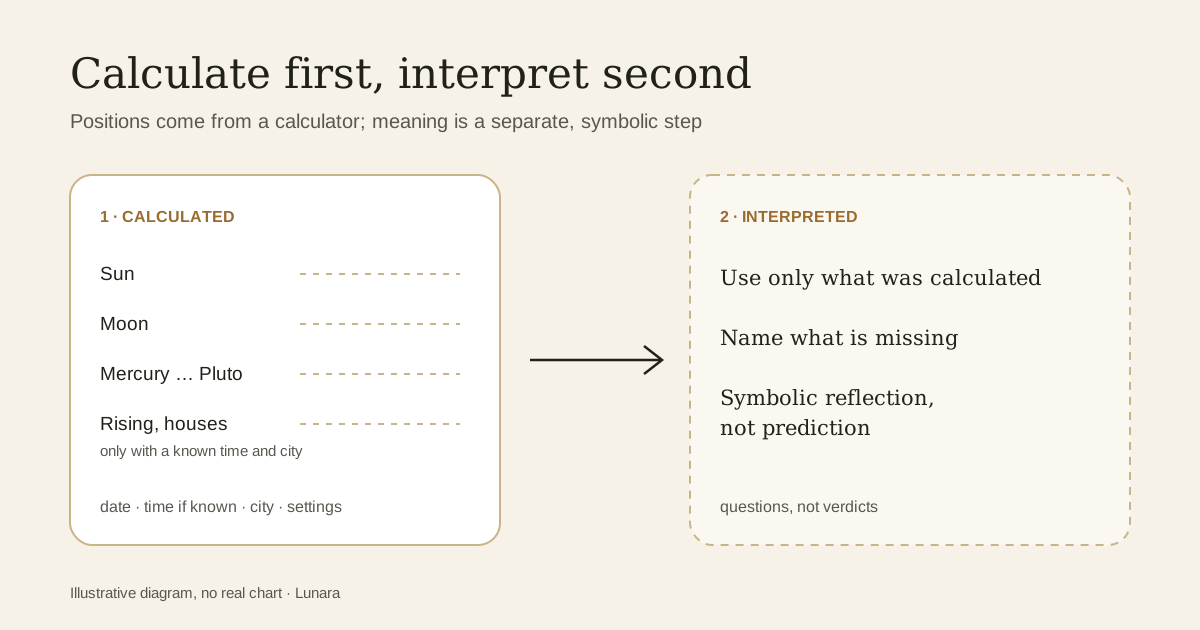
Short answer: yes, ChatGPT can talk about a birth chart you give it. It can explain what Venus in Scorpio is traditionally said to mean, or what astrologers usually say about a Sagittarius Moon. What a fluent answer doesn't show, on its own, is whether the planetary positions behind it were actually calculated.
Some versions and setups can connect to tools, run code or use a calculator, and those can supply real calculations. Others may simply produce text that looks like a chart. From the answer alone, you often can't tell which happened.
So the safest order is simple: calculate first, interpret second.
Why a confident answer isn't a calculation
A birth chart is two different things stacked together.
The first is astronomy-style arithmetic. From a date, a time and a place, software works out where the Sun, Moon and planets were along the zodiac, and, if the time is known, which sign was rising and where the houses fall. This needs ephemeris data and correct timezone handling. Calculation libraries such as the Swiss Ephemeris exist for exactly this job.
The second is interpretation: what tradition says those positions symbolise. That part is a matter of astrological convention, not measurement, and a precise calculation doesn't make the interpretation scientifically validated.
A language model is good at the second kind of text. OpenAI's own help article, Does ChatGPT tell the truth?, notes that its answers can sound confident and still be wrong, and that tools such as search or code can help ground facts and calculations. For a chart, that's the key point: get the positions from a calculator, then decide what to discuss.
A workflow that keeps the two apart
1. Calculate the chart with a dedicated tool
Use a calculator to get the positions. You can calculate your free birth chart on Lunara: it asks for a birth date, an optional time and an optional city, with no sign-up. If you want to know what the free result includes and what it leaves out, our guide to free birth chart readings online walks through it.
2. Leave an unknown birth time blank
Don't type 12:00 as a placeholder. A made-up noon time produces a made-up Rising sign and made-up houses, and any interpretation built on them inherits the guess.
When the time field is left blank, Lunara's calculator doesn't show a Rising sign or houses. If the Moon changed sign during your birth day, it shows both possible signs rather than picking one. For more on that, see finding your Moon sign without a birth time.
3. Add your birth city when you know it
The city isn't decoration. Lunara uses its coordinates to look up the timezone, including historical daylight-saving rules, and to convert your local birth time into the universal time the calculation needs. A wrong timezone can shift the Moon's degree, the Rising sign and every house. With a known time, the Rising sign and houses need the city too.
4. Check the settings before calling a chart "wrong"
Two charts for the same birth details can legitimately disagree. Before deciding one is mistaken, compare:
- Zodiac: tropical or sidereal. Western astrology usually uses the tropical zodiac; Vedic astrology uses a sidereal one, which shifts most placements by almost a whole sign.
- House system: Placidus, Whole Sign, Koch, Equal and others divide the chart differently, so a planet can land in a different house.
- Node type: some tools use the mean lunar node and others the true node. They are usually close but not identical.
- Inputs: the same date, time, timezone and place.
If the settings differ, the charts aren't contradicting each other. They're answering slightly different questions.
5. Keep calculation and interpretation separate
Once you have the positions, you can bring them into a conversation with an AI assistant if you want to. Paste only the placements you're sure of, and tell it what not to do.
A prompt you can copy
This is a question we wrote for readers to adapt, not a sample of what any model replies:
Use only the placements I provide.
Do not guess missing birth times, Rising signs, houses, degrees or aspects.
State missing information.
Treat interpretation as symbolic reflection, not prediction,
diagnosis or evidence about another person.
Below it, list your placements as the calculator shows them, for example the sign for each planet. If you don't have a birth time, say so plainly, and leave out the Rising sign and houses.
Even with this prompt, read the reply critically. If it mentions a placement you didn't provide, treat that part as invented.
How Lunara's calculator is set up
So you can compare like with like, here are the conventions our engine uses:
- Tropical zodiac, geocentric positions, from the Swiss Ephemeris library with locally installed ephemeris files.
- Placidus houses, used only when both a birth time and a city are given.
- Bodies: the Sun, Moon, Mercury through Pluto, the lunar North Node (calculated as the true node) and Chiron.
- Local time to universal time through the IANA timezone found from your city's coordinates.
- No birth time: the engine uses a representative noon internally, but the results page treats the chart as date-only. It hides the Rising sign, houses and degrees and, when a city is given, checks whether the Sun or Moon changed sign across your local birth day.
Privacy
Your birth date, time and place are personal details. Don't put them in public posts, shared prompts or screenshots. If you use any AI service, read that service's own settings and terms; we can't make promises about how a third party stores or uses what you type.
Explore further
To see how a written natal reading handles calculated placements, read the sample natal reading. It uses fictional birth details, not a real person's chart. If you want one for yourself, there's an optional paid personal birth chart reading. It's a separate, automated, written interpretation of one person's chart, not a human astrologer and not a forecast or a guarantee. What's included and the price are shown before you buy.
Lunara wrote this article with AI assistance. No independent astrologer reviewed it.