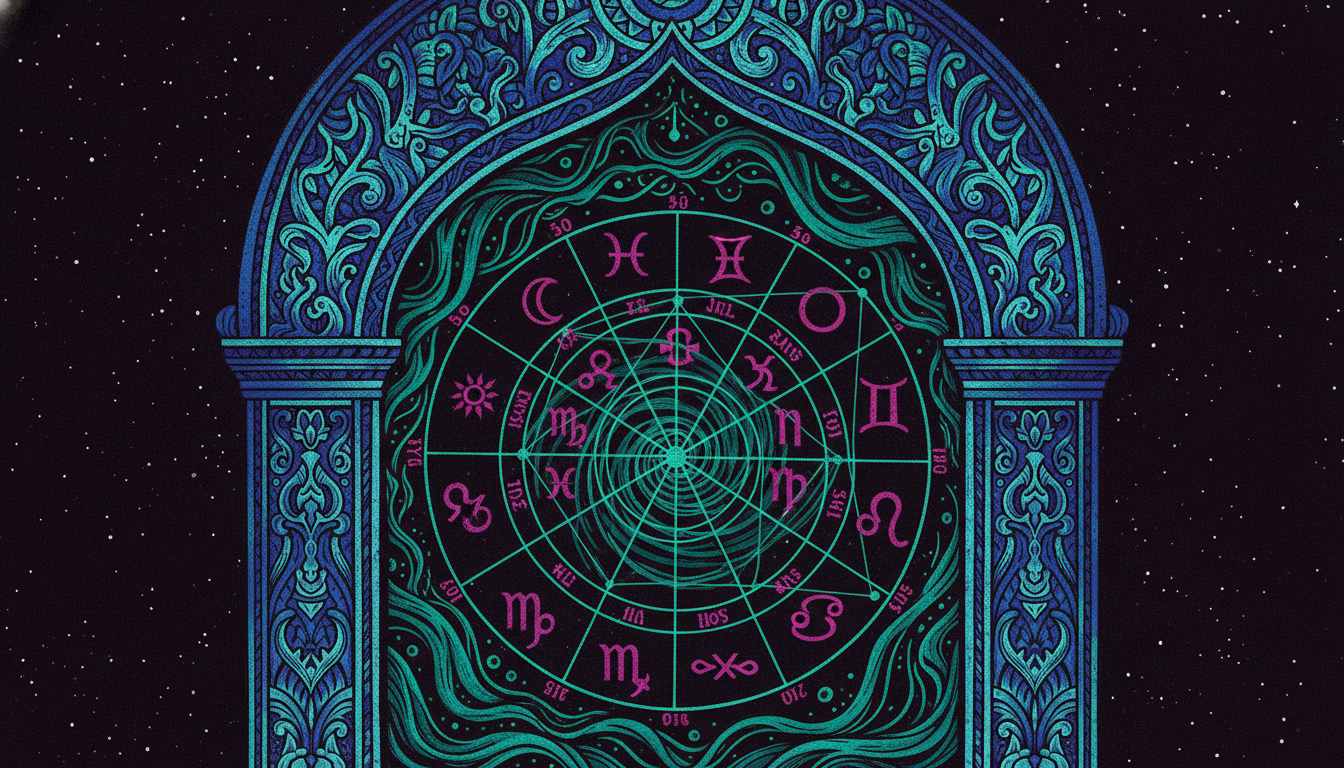
The first time you see a birth chart wheel, it probably looks like an intimidating tangle of symbols, lines, and numbers. Where do you even start?
Learning how to read a birth chart wheel is simpler than it appears. Yes, there's depth you can explore for years, but the basic structure is straightforward—and once you understand what you're looking at, the wheel becomes a readable map of your personality, potential, and life path.
The birth chart wheel (also called a natal chart) is the visual representation of where every planet was positioned in the zodiac at the exact moment and location of your birth. Reading it means understanding the wheel's layout, what all those symbols mean, and how the pieces fit together.
In this guide, we'll walk you through exactly how to read a birth chart wheel step by step—from the basic structure to the specific placements and how to begin interpreting them.
Understanding the Birth Chart Wheel Layout
Before diving into details, let's identify what you're looking at.
The Basic Structure
A birth chart wheel consists of:
-
A circle (representing the 360° zodiac)
-
12 sections (the houses, like slices of a pie)
-
Zodiac signs (around the outer rim)
-
Planetary symbols (scattered throughout)
-
Lines crisscrossing the center (aspect lines)
-
Numbers and degrees (showing exact positions)
Think of it as a map of the sky at your birth moment, viewed from your specific location on Earth.
Orientation
Most birth charts are oriented with:
-
Left side (horizontal line): The Ascendant or Rising sign (eastern horizon)
-
Right side (horizontal line): The Descendant (western horizon)
-
Top (vertical line): The Midheaven or MC (highest point in the sky)
-
Bottom (vertical line): The IC or Imum Coeli (lowest point)
These four points (called angles) are critical in chart interpretation.

The 12 Houses: Reading the Wheel's Structure
The chart wheel is divided into 12 sections called houses, numbered 1 through 12, moving counterclockwise.
Where the Houses Start
The 1st house begins at the Ascendant (the left horizontal line). This is often marked "AC," "ASC," or "1st."
From there, houses proceed counterclockwise around the wheel:
-
1st house: Top left section
-
2nd house: Next section down on left
-
3rd house: Lower left
-
4th house: Bottom (at the IC)
-
5th house: Lower right
-
6th house: Right side, below middle
-
7th house: Right horizontal line (Descendant)
-
8th house: Upper right
-
9th house: Right side, above middle
-
10th house: Top (at the Midheaven)
-
11th house: Upper left
-
12th house: Left side, above middle (just before 1st house begins again)
What Each House Represents
Each house governs a life area:
-
1st House: Self, identity, appearance, approach to life
-
2nd House: Money, possessions, values, self-worth
-
3rd House: Communication, siblings, learning, short trips
-
4th House: Home, family, roots, emotional foundation
-
5th House: Creativity, romance, children, pleasure
-
6th House: Health, daily work, service, routines
-
7th House: Partnerships, marriage, committed relationships
-
8th House: Transformation, shared resources, intimacy, death/rebirth
-
9th House: Philosophy, higher education, travel, meaning
-
10th House: Career, public reputation, authority, achievement
-
11th House: Friendships, groups, aspirations, community
-
12th House: Spirituality, unconscious, secrets, solitude
House Sizes
You may notice houses aren't all equal-sized. This is normal and depends on:
- Your birth location (latitude)
- The house system used (Placidus, Whole Sign, Koch, etc.)
Don't worry about unequal houses—it's expected.
The Zodiac Signs on the Wheel
Around the outer rim of the wheel, you'll see the 12 zodiac signs marked with their symbols:
-
♈ Aries
-
♉ Taurus
-
♊ Gemini
-
♋ Cancer
-
♌ Leo
-
♍ Virgo
-
♎ Libra
-
♏ Scorpio
-
♐ Sagittarius
-
♑ Capricorn
-
♒ Aquarius
-
♓ Pisces
How Signs Relate to Houses
Each house cusp (starting line) falls in a specific zodiac sign based on your birth time and location.
Example:
-
If your Ascendant (1st house cusp) is at 15° Virgo, then:
- 1st house begins in Virgo
- The next house cusps fall in subsequent signs
- Not necessarily one sign per house (signs can span multiple houses or be "intercepted")
The sign on each house cusp colors how that life area operates.
The Four Elements
Signs are grouped by element:
-
Fire (Aries, Leo, Sagittarius): Energetic, passionate, bold
-
Earth (Taurus, Virgo, Capricorn): Practical, grounded, material
-
Air (Gemini, Libra, Aquarius): Intellectual, social, communicative
-
Water (Cancer, Scorpio, Pisces): Emotional, intuitive, sensitive
The Planets on the Wheel
Scattered throughout the wheel are symbols (glyphs) representing planets and points:
The Symbols
Luminaries:
- ☉ Sun
- ☽ Moon
Personal Planets:
- ☿ Mercury
- ♀ Venus
- ♂ Mars
Social Planets:
- ♃ Jupiter
- ♄ Saturn
Outer Planets:
- ♅ Uranus
- ♆ Neptune
- ♇ Pluto
Other Points:
- ☊ North Node
- ☋ South Node
- ⚷ Chiron
Reading Planetary Positions
Each planet sits within a specific house and zodiac sign.
Example: If you see ☉ in the upper right section of your wheel with "♌ 22°" next to it, this means:
-
Sun (☉)
-
In Leo (♌)
-
At 22 degrees of Leo
-
In whichever house that section represents (check the house numbers)
What it tells you:
-
Planet = what (Sun = identity)
-
Sign = how (Leo = creatively, dramatically)
-
House = where (10th house = through career, for example)
Planets in Houses
As you read around the wheel, note which house each planet occupies. This tells you where that planetary energy operates in your life.
Example:
- Sun in 10th house: Identity through career and public life
- Moon in 4th house: Emotions centered on home and family
- Venus in 7th house: Love expressed through partnerships
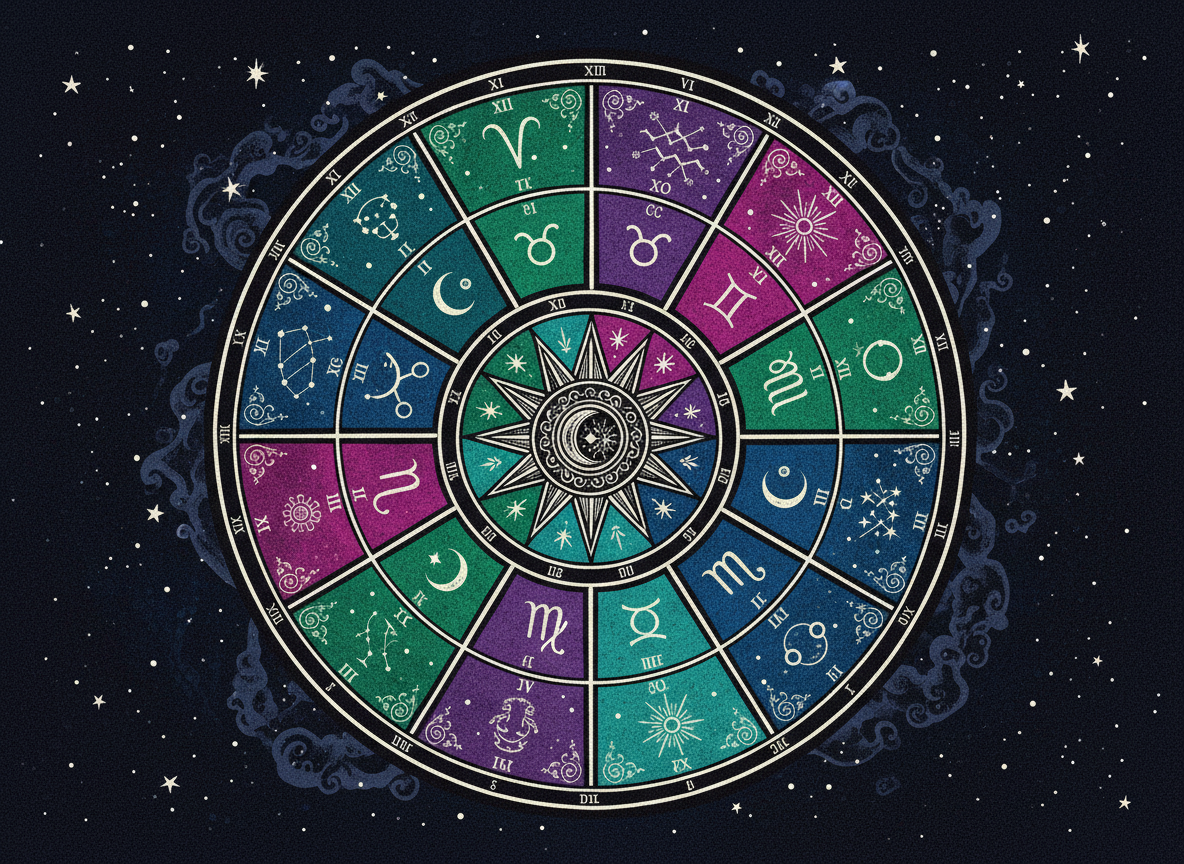
Type: Educational Diagram Dimensions: 1000x700 Alt Text: Birth chart wheel reading guide with labeled components Description: Comprehensive diagram showing how to read a birth chart wheel. Center: complete chart wheel. Surrounding annotations explain: 1) House numbers (with arrow showing counterclockwise count), 2) Zodiac sign symbols (outer rim), 3) Planet symbols (inside wheel), 4) Degrees and minutes notation, 5) Ascendant location (left), 6) Midheaven location (top). Color-coded sections for clarity. Style: Educational, clear, professional. Color palette: White background, purple house divisions, gold zodiac signs, teal planet symbols, clear dark labels. Priority: High
File Name: how-to-read-birth-chart-wheel-guide.jpg Priority: High
The Aspect Lines: Planetary Relationships
Lines crisscrossing the center of the wheel connect planets to each other, showing their relationships (aspects).
Line Colors
Different charts use different color schemes, but commonly:
-
Blue or green lines: Harmonious aspects (trines, sextiles)
-
Red lines: Challenging aspects (squares, oppositions)
-
Other colors: Neutral aspects (conjunctions, quincunxes)
The Major Aspects
Conjunction (0°): Planets together, energies fuse Sextile (60°): Supportive, opportunity Square (90°): Tension, growth through challenge
Trine (120°): Easy flow, natural talent Opposition (180°): Polarity, need for balance
Reading Aspect Lines
If you see a line connecting, say, the Sun and Moon:
-
Check if it's blue (harmonious) or red (challenging)
-
This shows whether your identity (Sun) and emotions (Moon) work together easily or create internal tension

The Four Angles: Critical Points on the Wheel
The four angles are the most important points on the wheel:
1. Ascendant (AC or ASC) — Left Horizontal Line
What it is: The zodiac sign rising on the eastern horizon at your birth
What it reveals:
-
Your rising sign (outward personality)
-
How you approach life
-
Your physical appearance and energy
-
The "mask" you wear
2. Descendant (DC or DSC) — Right Horizontal Line
What it is: The point directly opposite your Ascendant
What it reveals:
- What you seek in partnerships
- Qualities you're attracted to in others
- Your approach to committed relationships
3. Midheaven (MC) — Top Vertical Line
What it is: The highest point in your chart, cusp of the 10th house
What it reveals:
-
Your career direction and calling
-
Public reputation and achievements
-
Your life's direction and goals
4. Imum Coeli (IC) — Bottom Vertical Line
What it is: The lowest point in your chart, cusp of the 4th house
What it reveals:
-
Your roots, home, and family background
-
Emotional foundation and private self
-
What makes you feel secure
These four angles form the skeleton of your chart and are exceptionally important in interpretation.
How to Read Your Birth Chart Wheel: Step-by-Step
Now let's put it all together with a practical reading process:
Step 1: Locate Your Ascendant (Rising Sign)
Find the left horizontal line. What zodiac sign is there?
Example: Ascendant in Libra
This is your rising sign—how you approach life and appear to others.
Step 2: Identify Your Sun and Moon
Find the ☉ and ☽ symbols.
- What signs are they in?
- What houses are they in?
Example:
- Sun in Gemini in 9th house: Identity through learning, travel, philosophy
- Moon in Pisces in 6th house: Emotions through service, health, daily work
Step 3: Find Mercury, Venus, and Mars
Locate ☿, ♀, and ♂.
- Note their signs and houses
Example:
- Mercury in Taurus in 8th house: Practical thinking about deep subjects
- Venus in Cancer in 10th house: Nurturing love expressed through career
- Mars in Leo in 11th house: Bold action in groups and friendships
Step 4: Note Jupiter and Saturn
Find ♃ and ♄.
Example:
- Jupiter in Sagittarius in 3rd house: Luck with learning and communication
- Saturn in Capricorn in 4th house: Responsibility regarding home and family
Step 5: Look for Stelliums (Clusters)
Do you have 3+ planets in one house or sign? That's a major life theme.
Example: Sun, Mercury, and Venus all in Gemini = Strong emphasis on communication, learning, versatility
Step 6: Notice Aspect Lines
Which planets are connected?
- Blue/green = these energies work together easily
- Red = these energies create tension
Example: Blue line from Sun to Jupiter = Natural optimism and confidence
Red line from Moon to Saturn = Emotional restriction but also maturity
Step 7: Check Your Angles
What signs are on your four angles?
-
Ascendant: Your approach
-
Descendant: What you seek in partnership
-
Midheaven: Your career direction
-
IC: Your emotional foundation

Common Questions About Reading Chart Wheels
Q: Why are my houses different sizes?
A: This is normal. House size depends on your birth location and the house system used. It doesn't mean those life areas are more or less important.
Q: What if a house is empty (no planets)?
A: Empty houses are normal and fine. That life area is still active—look at the sign on the house cusp and the planet ruling that sign for insights.
Q: Why do some planets have (R) next to them?
A: (R) means retrograde—the planet appeared to move backward from Earth's perspective at your birth. This affects how that planet's energy expresses (more internal, reflective, or challenged).
Q: What are those extra numbers and symbols in my chart?
A: Advanced charts show asteroids (Chiron, Juno, Pallas, etc.), lunar nodes, Arabic parts, and other points. As a beginner, focus on the main planets first.
Key Takeaways
-
The birth chart wheel is divided into 12 houses (life areas)
-
Houses are numbered 1-12 counterclockwise starting from the Ascendant
-
Zodiac signs appear on the outer rim, coloring each house
-
Planets inside the wheel show what energies operate where in your life
-
Aspect lines show how planets relate to each other
-
The four angles (Ascendant, Descendant, Midheaven, IC) are critical points
-
Start reading with: Ascendant, Sun, Moon, then personal planets
-
The wheel is a map—learning to read it unlocks self-understanding
Frequently Asked Questions
Q: Is there a right way up for a birth chart wheel?
A: Yes. The Ascendant should be on the left horizontal line, and the Midheaven at the top. This is the standard orientation for most Western astrology charts.
Q: Do I need my exact birth time to read my chart wheel?
A: For a complete wheel—yes. Without birth time, you can't determine your Ascendant, houses, or angles. You can still see planetary signs and aspects, but the wheel structure requires exact time.
Q: How long does it take to learn to read chart wheels?
A: Basic reading can be learned in hours. Understanding takes weeks. Proficiency takes months of practice. Start simple and build gradually.
Q: Can I read someone else's chart wheel?
A: Yes, with their birth information (date, time, location). The process is the same—identify houses, signs, planets, and aspects.
Q: Are free online chart wheels accurate?
A: Yes. Free calculators use the same astronomical data (ephemeris) as professional astrologers. As long as you enter accurate birth information, the wheel is precise.
Start reading your birth chart wheel today
Stop feeling overwhelmed by the symbols. Calculate your free birth chart now and get a clear wheel showing your sun, moon, rising, and all planetary placements.
Related Articles: